Summary
An elephant dream concerns concentrated power and wealth. Riding, finding bones or dung, and an emperor's capture lead to distinct results.
At a glance
Dreaming about an elephant traditionally points to power and wealth. Riding it signifies rule over another person's possessions, finding bones or dung signifies wealth, and an emperor's capture signifies capturing a wealthy man.
The article separates the elephant's broad power-and-wealth field from its three action results and preserves the emperor-only limit on capture.
Identify the elephant action and the dreamer's rank when capture appears, then keep the verdict tied to that condition.
The traditional meaning of an elephant dream
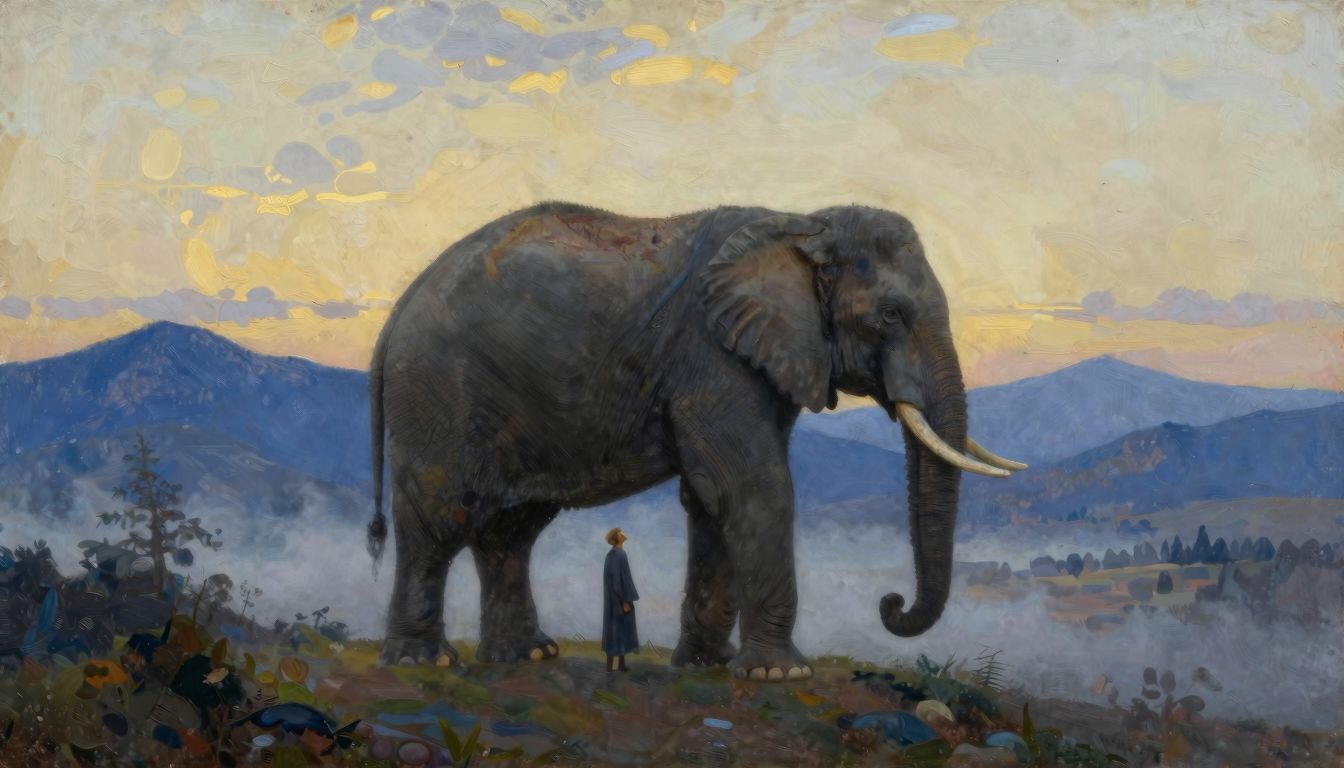
The elephant represents a powerful, wealthy figure and can also carry the force of a moderate enemy. Its size and force place the dream in the realm of authority, resources, and a power beyond the dreamer's ordinary reach. The image alone gives that broad field; the action in the dream gives the more exact outcome.
The detail that changes the verdict
Ask what happened with the elephant, then check whether the dreamer is an emperor when capture appears.
- Riding the elephant: rule over another person's possessions.
- Finding elephant bones: wealth.
- Finding elephant dung: wealth.
- Capturing an elephant as an emperor: capturing a wealthy man.
The capture result belongs to an emperor; it should not be extended to a general dreamer. Incidental details such as color, mood, direction, or setting do not replace these actions as the basis for the reading.
A case walkthrough
A woman dreams that she climbs onto an elephant and rides it through a market without falling or fleeing. The central action is riding, so the reading follows riding rather than the market. The verdict is rule over another person's possessions.
For a useful follow-through action, she can look at a real responsibility involving shared property, delegated resources, or stewardship and distinguish what she may direct from what she merely wants to possess.
How to judge your elephant dream
Use the same three-step process for a concrete dream sentence. Take: “I found elephant bones beside a road.”
- Name the central symbol: elephant, a figure of concentrated power and wealth.
- Name the result-changing detail: finding bones, not the road.
- Apply the matching verdict: finding elephant bones signifies wealth.
If the dream sentence instead says, “I rode an elephant,” use the riding result. If it says an emperor captured an elephant, use the emperor-only capture result. Do not combine outcomes unless the dream contains the relevant actions and condition.
Frequently asked questions
Does an elephant dream identify the wealthy person?
No. The capture reading names a wealthy man only as the result of an emperor's capture; it does not identify a person, set a time, or promise a particular encounter.