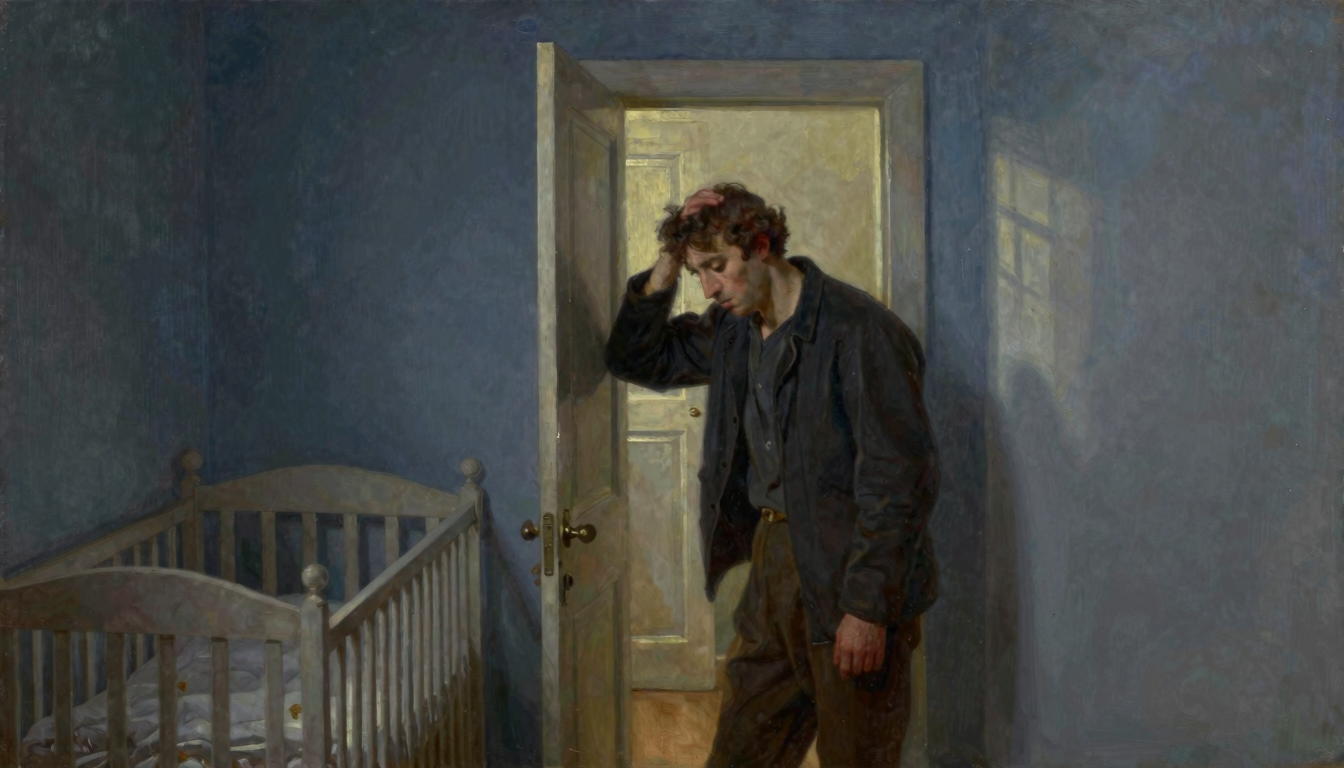
Summary
Searching for a missing baby turns uncertainty into an urgent scene. The emotion and waking-life responsibility reveal what needs care.
At a glance
Searching for a baby in a dream often expresses fear that something vulnerable cannot be protected. Check real-world facts and choose one caring action instead of treating it as a prophecy.
Separates fear of loss from literal prediction and identifies controllable care.
Describe the search; name the fear; check real-world evidence; take one caring action.
The short answer
The strongest clue is the feeling during the search. Panic can show fear that you will fail to protect what matters. Guilt may point to an impossible standard of responsibility. If you eventually find the baby, the dream may show reassurance or restored agency. If you wake before finding them, uncertainty is the theme—not proof of an ending.
What the missing baby may represent
Sometimes the image connects with ordinary caregiving worries, a pregnancy, family change, or news about someone vulnerable. At other times the baby symbolizes a new project, identity, or hope that still needs protection. Ask what in waking life is small, new, dependent, or easily overlooked. Do not assume the dream identifies a literal child.
The location matters as a practical clue. Searching a home may reflect family routines; searching a public place may reflect fear of losing control under other people's eyes. A locked room can suggest limited access to information, while an open path can suggest that help is available. These are possibilities, not fixed predictions.
Fear of loss is not evidence of loss
Nightmares often rehearse the most frightening version of uncertainty. A missing baby dream can make the mind demand certainty when none is available. Treat the dream as an invitation to check facts, communicate, and care for yourself—not as a reason to panic, accuse someone, or make a major decision without evidence.
If the dream repeats, gentle routines may help: write down the ending, limit alarming media before sleep, and discuss persistent anxiety with a qualified professional. Real safety concerns deserve real-world action; symbolic imagery cannot replace it.
A practical judgment path
Write: “I searched every room for the baby and woke before I found them.” Then ask what you feared would happen, what the baby represented in your current life, which facts support that fear, and what one caring action is available today.
For example, Jordan dreamed that a baby disappeared during a crowded family gathering. Jordan had recently started a demanding course and feared neglecting both study and family. Instead of treating the dream as an omen, Jordan arranged a shared calendar, called a sibling for reassurance, and set a realistic study boundary. The search became a prompt for care; the anxiety eased when responsibilities were made visible.
Frequently asked questions
What does it mean to dream about a baby you cannot find?
It may reflect fear of loss, responsibility, vulnerability, or a new situation that feels difficult to protect. It is not proof that harm will occur.
Is this dream a warning about my child?
A dream cannot establish a real-world danger. Check practical facts and safety needs directly rather than treating the image as a prediction.
What if I find the baby at the end?
Finding the baby can represent reassurance, restored control, or relief after uncertainty. Notice what helped you find them.
What if I never find the baby?
An unfinished search often reflects unresolved uncertainty. It does not prove permanent loss; identify what information or support is missing.
What should I do after this dream?
Record the setting and emotion, check real-world evidence, take one caring action, and seek support if fear continues to disrupt sleep.