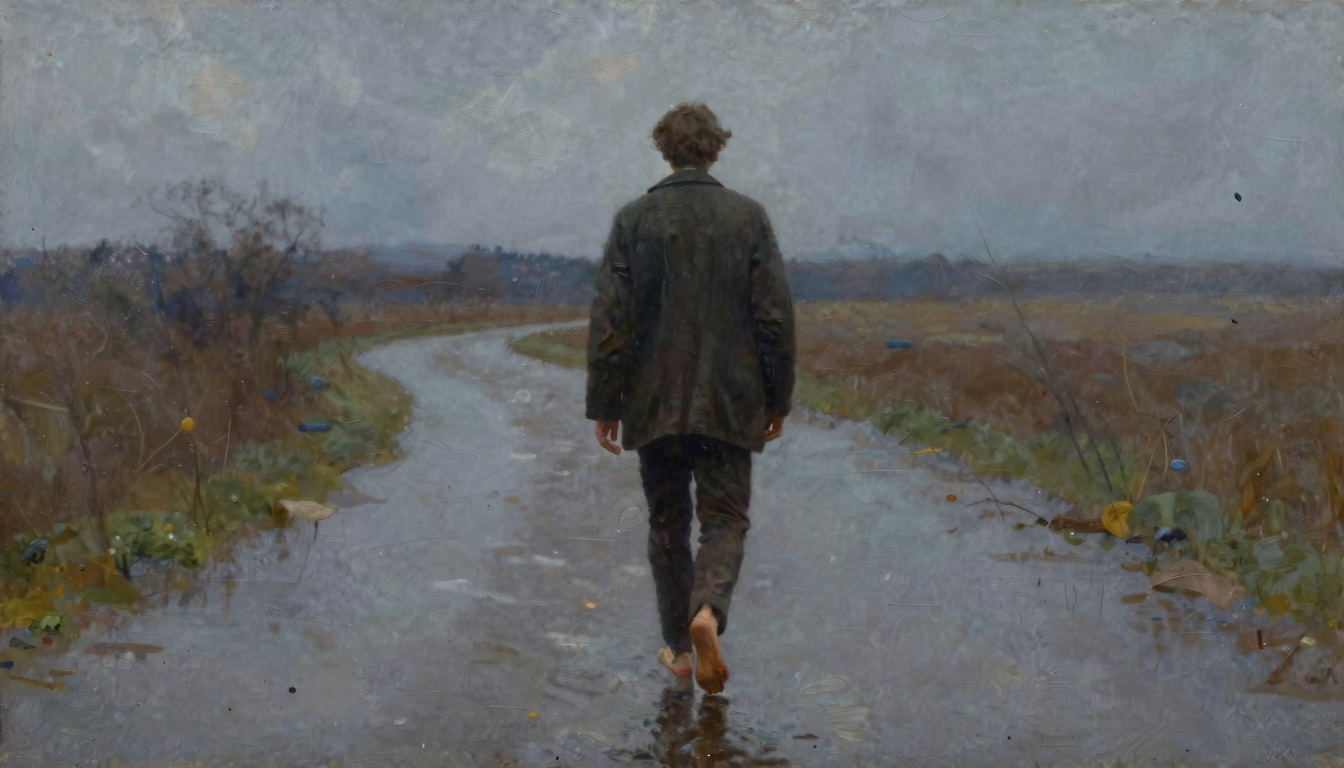
Summary
A barefoot walk on wet ground may reflect personal responsibility under changing conditions. The surface and feeling show whether the dream leans toward manageable progress or caution.
At a glance
Walking barefoot on wet ground may indicate that you are personally exposed to a changing responsibility. A steady walk supports careful progress, while pain or slipping calls for caution and firmer boundaries.
Surface, feeling, and movement create a repeatable responsibility judgment process.
Record the exact surface, feeling, direction, and waking-life duty before deciding whether to proceed, pause, or ask for help.
What the dream is asking you to carry
Walking barefoot puts the dreamer in direct contact with the path. In ordinary life this can reflect a duty that cannot be delegated: a difficult conversation, a family promise, a work deadline, or a purchase that needs careful thought. Wet ground adds uncertainty. It may be rain, a recently washed floor, a muddy route, or simply a surface that feels cold and unstable. The scene often points toward responsibility under changing conditions rather than a fixed prediction.
If you remember moving steadily, the dream can point to an opening. You may be able to finish a task, repair trust, or make a careful decision by staying close to facts. If you slipped, kept searching for dry ground, or felt pain, the same responsibility may be producing strain. That condition can suggest a delay, a boundary problem, or a cost that has not yet been counted.
How surface and feeling change the reading
The surface is a practical key. Soft grass or sand may suggest that an uncomfortable duty is still manageable. Stones can reflect criticism, friction, or a route that demands patience. Glass or sharp debris might indicate that continuing without protection could create a preventable loss. Mud can point to confusion, slow progress, or involvement in someone else's unresolved problem. Walking barefoot in public may add concern about reputation or being judged while you handle the duty.
The feeling supplies the direction. Calmness and clear purpose support a constructive reading; shame, panic, coldness, or repeated slipping make the warning stronger. A wet road in the rain may reflect a transition that requires attention to timing. A wet floor inside a home may connect the responsibility to family or living arrangements. These details refine the question; they do not create a guaranteed omen.
What it can mean for work, money, love, and home
At work, a steady barefoot walk may indicate that taking ownership of a delicate assignment could improve your standing. A slippery or crowded route can point to unclear instructions, delayed payment, or a conflict that should be documented before you commit more effort.
For money and purchases, the dream may encourage a slower check of terms, maintenance, and hidden costs. Dry footing in the dream supports a measured opportunity; wet mud, pain, or a sudden fall might signal that an attractive choice carries pressure or loss if rushed.
In love and marriage, bare feet can reflect emotional honesty and the responsibility of showing up without defenses. A partner walking beside you may support shared repair. Walking alone while trying not to fall can point to carrying too much of the relationship's practical or emotional labor.
For family and home, wet ground may connect to chores, caregiving, relocation, or a decision that affects everyone in the household. A clean path can suggest that the duty is workable with cooperation. Flooding, darkness, or repeated slips can indicate that a plan needs more time, help, or a clearer boundary.
A usable judgment process
Start with the exact sentence: “I was walking barefoot on wet ground, and I felt calm while reaching a doorway.” The action is walking, the condition is wet ground, the exposure is bare feet, and the outcome is forward movement. That combination may point to a responsibility that is uncomfortable but manageable.
Then ask four questions: Was the surface safe or sharp? Did you choose the route or get pushed onto it? Did you arrive, turn back, or fall? Which waking-life duty has the same feeling of direct exposure? This process keeps the symbol tied to a real decision instead of turning it into a universal forecast.
A representative scenario shows how the conditions matter. A project coordinator dreams of crossing a wet courtyard barefoot before presenting a delayed budget to her team. She feels cold but keeps her balance and reaches the meeting room. Reading the steady movement as a sign to accept responsibility, she checks the figures, explains the delay, and asks for a revised deadline. The meeting becomes tense but productive, and the clearer plan reduces later confusion. The dream may have functioned as a warning to prepare carefully, not as proof that the outcome was predetermined.
Spiritual context without certainty
Some people read barefoot walking as humility, grounding, or a return to direct contact with life. Wet ground can then symbolize emotional cleansing or a period in which old certainty has softened. That spiritual language may help you reflect, but it cannot verify a message from outside the dreamer or guarantee an event. The safest use is to pair the symbolic reading with observable facts, honest communication, and a pace that protects your health and resources.
Frequently asked questions
What does it mean to dream of walking barefoot on wet ground?
It may suggest that you are carrying a responsibility while staying emotionally exposed. Wet ground can point to changing conditions, and bare feet can reflect direct contact with consequences. The useful reading depends on whether the walk felt steady, painful, rushed, or calm.
Is walking barefoot in a dream a good sign?
It can be favorable when the ground feels safe and the dreamer walks with purpose; this may indicate readiness to handle a duty honestly. It can be cautionary when the ground is sharp, slippery, dirty, or frightening, which might point to pressure, delay, or a need to set firmer limits.
What does the wet ground change in a barefoot dream?
Water often makes the condition more changeable. A calm wet path may reflect adaptation and a responsibility that can be managed, while flooding, mud, or loss of balance can point to confusion, emotional strain, or delayed progress.
Does the dream relate to work, money, or relationships?
It can. At work it may reflect a task that requires personal accountability; with money it may warn against acting before conditions are clear; in love or family life it might show that you are taking on another person's needs. A steady walk supports an opening, while pain or slipping calls for caution.
What is the spiritual meaning of walking barefoot?
In spiritual language, bare feet can be read as humility, grounding, or direct contact with a life lesson. That is an interpretive frame, not proof of a supernatural message or a guaranteed future event.
How should I interpret a dream about barefoot walking on stones, glass, grass, or sand?
Keep the exact surface. Grass or soft sand may suggest manageable adjustment; stones or glass can point to conflict, criticism, or a costly route. These are conditional symbolic readings, so the dreamer's feeling and next action still matter.