Summary
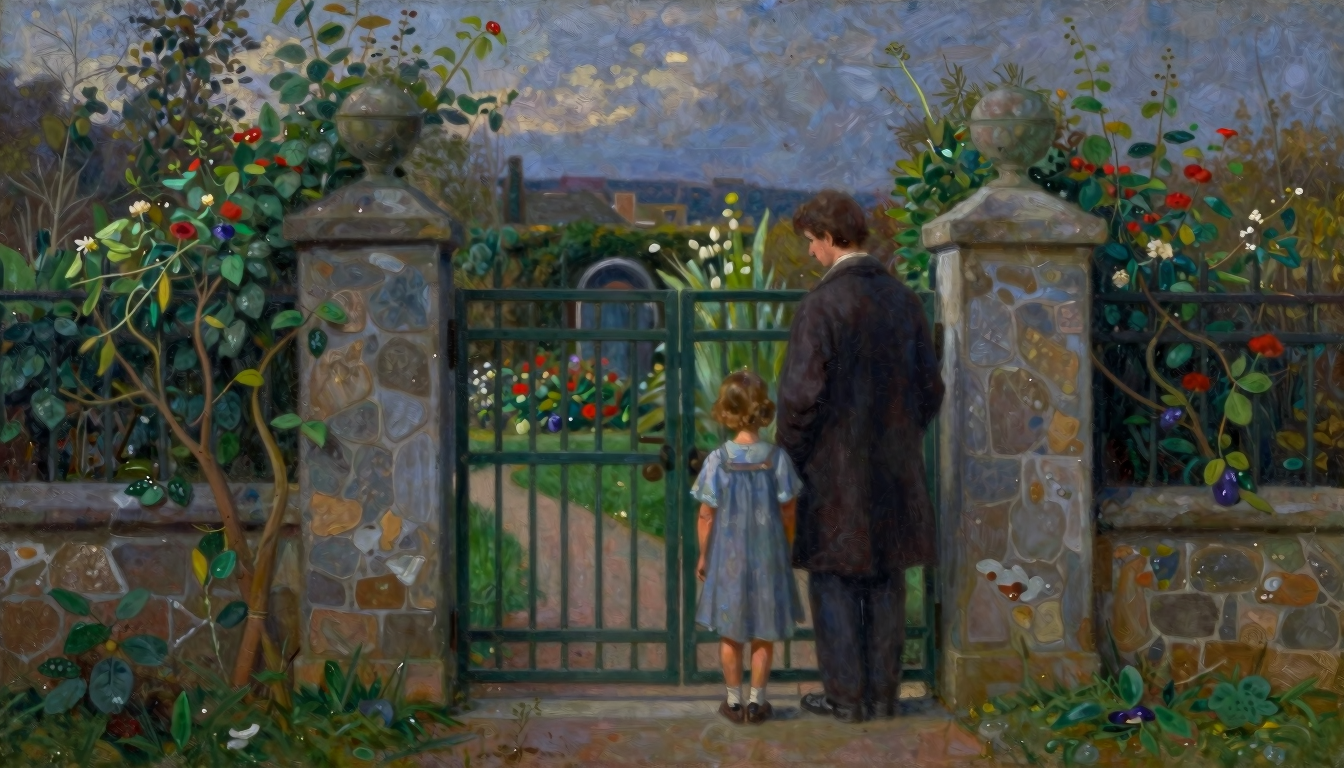
A garden you cannot enter with a child may reflect a protected opportunity or family responsibility that needs time, permission, and careful preparation.
At a glance
A garden you cannot enter with a child may indicate that a desired opportunity or family hope is close but not ready for access. The child and the barrier show whether patience, protection, or a firmer boundary is needed.
The barrier, child position, and response create a repeatable access-and-care judgment process.
Record the garden, barrier, child's condition, feeling, and waking-life permission or preparation before acting.
Why the closed garden matters
A garden is an image of cultivation: something living has been tended, protected, and given time. Being unable to enter shifts the meaning from simple abundance to access. You may see a desirable result, understand what you want, and still lack permission, timing, information, or emotional readiness. The dream does not prove that the opportunity will arrive or disappear. It can point to the gap between what looks ready and what you can responsibly reach now.
The child changes the emotional center. A child in a dream may reflect a dependent person, a new plan, a vulnerable part of yourself, or a family decision that needs protection. Notice whether the child is with you, inside the garden, outside the gate, or only glimpsed at a distance. A child safely beside you supports a reading about shared care and measured preparation. A child behind a locked gate can make the delay feel urgent and may indicate fear that someone or something entrusted to you is being kept from help.
Conditions that support an opening or a warning
A bright garden, a visible but unlatched gate, a calm child, or an invitation to wait may suggest that access is possible through timing, permission, and steady care. You might be approaching a family conversation, a relationship commitment, a move, or a work opportunity that needs one more practical step. The dream can encourage preparation rather than force.
A high wall, broken lock, darkness, thorns, heavy rain, or a child who is crying can point toward pressure or an unsafe route. Trying to climb despite injury may reflect pushing past a boundary, spending money before terms are clear, or taking responsibility that belongs to someone else. If you walk away with the child safely beside you, the scene may indicate that protecting what is vulnerable matters more than winning immediate access.
Love, marriage, and family
In love, the garden may represent a private future that one person can imagine but the other has not agreed to enter. A child who smiles or walks beside both partners can support a reading of shared hopes and a conversation about commitment. A locked gate with one partner absent might indicate emotional distance, unequal readiness, or a boundary that needs to be respected before promises are made.
For family and home, the child can bring caregiving, fertility hopes, parenting questions, relocation, or a household decision into focus. An orderly garden may suggest that a home plan can grow with patient preparation. A frightened child outside while adults remain inside could reflect a practical gap: unclear childcare, a safety concern, or a family member who needs a direct conversation. The dream is a cue to check real arrangements, not a prediction about a child's future.
Money, work, and social standing
For money and purchases, a beautiful inaccessible garden may mirror an attractive property, school, treatment, or investment that is not yet within safe reach. A calm child and a clear boundary can support waiting, comparing terms, and building a reserve. A damaged gate or desperate attempt to enter might point to hidden costs, debt pressure, or a deal that depends on someone else's approval.
At work or in business, the garden can stand for a role, client, promotion, or project whose benefits are visible but whose access is controlled. A child may represent a new team member, a fragile launch, or the part of the work that still needs mentoring. Asking for requirements and a realistic timeline may open the path; bypassing a gate can create conflict, delay, or reputational loss.
Socially, being watched outside a garden can reflect concern about belonging or being judged. An open conversation with the gatekeeper supports repair. Silence, ridicule, or a crowd blocking the entrance may point to social pressure and the need to choose relationships that allow safe, mutual access.
A practical way to read the dream
Write one sentence with the exact positions: “I stood outside a green gate; a calm child held my hand, and I was told to wait.” Then separate four elements: the desired place, the barrier, the child's condition, and your response. Ask which waking-life opportunity feels visible but not available, who or what needs protection, what permission or preparation is missing, and whether forcing access would create harm.
A project manager once dreamed of standing outside a walled garden while her young son waited beside her. She had been considering a costly move for a new role and felt tempted to sign before checking schools and the lease. Reading the child and the locked gate as a reminder that access required family preparation, she delayed the signature, visited the neighborhood, and negotiated a later start. The move went ahead with a safer budget and a workable school plan. The dream may have functioned as a warning to respect timing, not as proof that it caused the outcome.
Spiritual meaning without certainty
Some spiritual readings treat a garden as renewal, sanctuary, or a protected threshold, and a child as innocence or a new beginning. In that frame, the closed entrance may suggest that growth is being prepared privately or that humility and patience are required. This is an interpretive language, not evidence of a supernatural promise. Pair it with observable facts, consent, financial checks, and care for the people represented by the child.
Frequently asked questions
What does a garden you cannot enter mean in a dream?
It may suggest that a desired opportunity, peaceful space, or stage of growth feels visible but is not yet accessible. The reason for the barrier and your response determine whether the dream leans toward patience, boundaries, pressure, or delay.
What does the child add to the dream?
The child can bring care, vulnerability, family hopes, or a new responsibility into focus. A calm child may support measured preparation, while a frightened or trapped child can point to worry, conflict, or an urgent need to protect someone.
Is this dream a good or bad sign?
It can carry either direction. An inviting garden, safe child, and respectful waiting may indicate a workable opening later. Darkness, injury, panic, or forcing the gate might indicate pressure, loss, or a boundary that should not be crossed.
Could the dream relate to love, marriage, or having children?
It might reflect readiness, unequal timing, parenting concerns, or a private future that partners have not discussed. Use the dream to clarify consent, expectations, and practical support rather than to predict pregnancy or marriage.
What can it mean for money or work?
The garden may symbolize a role, property, purchase, or project whose benefits are attractive but whose access depends on approval or preparation. A clear plan supports waiting and due diligence; a damaged gate or desperate entry can point to hidden costs or conflict.
What is the spiritual meaning of a child outside a garden?
It may be read as innocence or a new beginning standing at a threshold. That reading can encourage patience and protection, but it does not establish a supernatural message or guarantee an event.