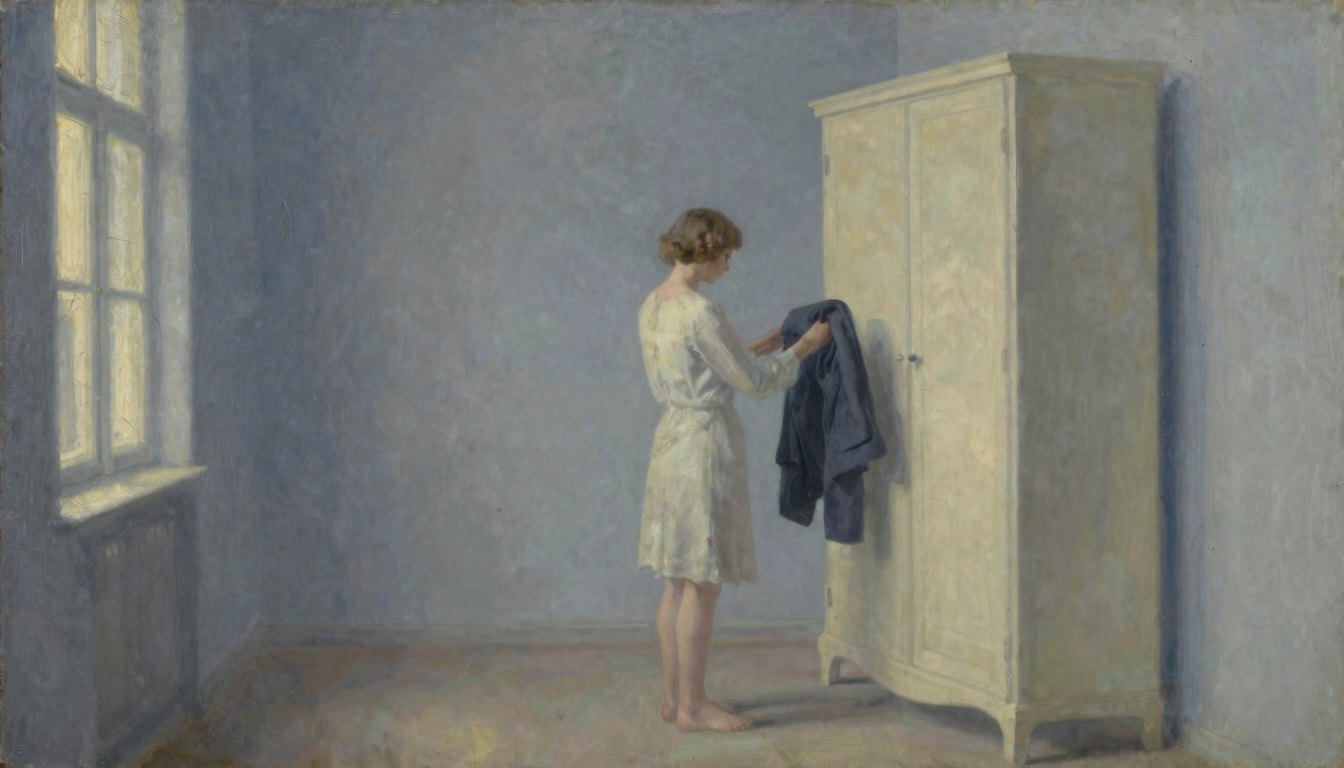
Summary
Wearing the wrong clothes may symbolize a role or expectation that no longer fits.
At a glance
Wearing the wrong clothes may symbolize a role, identity, or expectation that feels out of alignment; the dream invites a grounded adjustment rather than predicting an event.
Distinguishes identity mismatch, direction, value, and practical repair.
Name the garment, identify the mismatch, test waking evidence, and take one modest boundary action.
The short answer
The dream often asks whether you are trying to meet a situation with an identity that does not fit. Shame may point to fear of judgment; relief may show that an old role is loosening; curiosity can signal readiness to change. The details matter: shoes concern direction and grounding, pants can concern movement and dignity, jewelry can concern value and attachment, and another person’s clothes can concern borrowed duties or belonging.
What clothes represent in dreams
Clothes may symbolize dignity, social identity, boundaries, protection, and the part of life you allow others to see. A clean, comfortable garment is often read as prepared self-presentation. A stained or damaged one may reflect a concern that private strain is becoming visible. Wearing the wrong clothes shifts the emphasis from damage to mismatch: the material may be fine, but the role, setting, or ownership feels wrong. Some traditions interpret this as a call to restore harmony before an important step.
Wearing someone else's clothes
A dream about wearing someone else’s clothes can be interpreted as carrying that person’s expectations, status, grief, or responsibilities. If the clothes fit and feel warm, the image may suggest support or a valued inheritance. If they are too large, too small, or embarrassing, the dream may be showing that imitation has replaced your own judgment. Notice whether you chose the garment or were forced into it; that distinction often reveals whether the next action is accepting help or setting a boundary.
Wrong shoes and shoes on the wrong feet
A dream about wearing the wrong shoes may concern direction, pace, and readiness. Shoes protect the feet that carry you, so a mismatch can be read as uncertainty about a path or method. Wearing shoes on the wrong feet may suggest that a familiar plan is being applied backwards. Spiritually, some traditions see shoes as a sign of the road one is preparing to walk; the image can invite a pause before commitment. It does not foretell failure. Check the route, the resources, and whether the choice is actually yours.
Clothes symbolism and the lost-jewelry question
When people ask what clothes symbolize in dreams, they often also wonder what it means to lose jewelry. Jewelry belongs to adornment, value, promise, and memory rather than basic protection. Losing it may be interpreted as fear of losing recognition or as release from an attachment that has become heavy. If the dream links the lost jewelry with wrong clothing, the combined message may be that external approval is being reconsidered. Ask which value remains when status symbols are removed.
What pants may symbolize
Pants can symbolize movement, modesty, practical authority, and the ability to act in public. Wrong pants, missing pants, or pants that restrict walking may point to embarrassment about competence or fear that a practical role is not secure. In some folk readings, well-fitting trousers suggest readiness to stand on one’s own feet, while torn or mismatched ones suggest a need to repair routine support. Consider the task you were trying to do and whether the clothing helped you move.
Spiritual and folk meaning
A spiritual reading may treat clothing as the outer layer of the self and the wrong garment as a sign of energetic or moral misalignment. In some traditions, changing clothes, washing them, or covering the head marks a transition between states. Such rituals can help a person reflect, but they do not control destiny or establish a religious ruling. The gentler interpretation is that the dream highlights a threshold: choose what you carry forward, and release a role that no longer protects your values.
How the meaning changes in daily life
At work
Work and reputation. Being overdressed, underdressed, or in a colleague’s uniform may reflect concern about authority or belonging. Identify one unclear expectation and ask for its priority instead of guessing.
With money
Money and security. Clothes that are cheap, borrowed, or falling apart can symbolize resources and self-worth. Review one real expense or obligation, then make one modest adjustment; the dream is not a financial forecast.
In relationships
Relationships. Wearing a partner’s or parent’s clothes may show affection, loyalty, or pressure to become someone else. Name one need in your own words and decide which request or limit is fair.
For health and energy
Health and energy. Tight, heavy, or unsuitable clothes can represent feeling unable to move or rest. This is not a medical conclusion. Check sleep, workload, and support, and seek care for actual symptoms.
In family life
Change and spiritual practice. Changing into clothes that fit can symbolize a new chapter or a more honest identity. Write the value you want the next role to protect, then choose one small action that expresses it.
A present-day example
Daniel dreamed he arrived at a family ceremony wearing his manager’s formal jacket and shoes on the wrong feet. He felt embarrassed, but an aunt offered him a plain sweater from a spare room. In waking life he had been doing a supervisor’s tasks without the title and was avoiding a conversation about workload. He read the dream as a mismatch between borrowed authority and his own needs. He listed the duties, asked his manager to clarify ownership, and wore ordinary clothes to the next family event. After the conversation, the schedule became clearer, and the ceremony itself was uneventful. The ordinary result came from correcting a boundary, not from the dream predicting an event.
A practical interpretation check
Write down the garment, who owned it, where you wore it, and the feeling in your body. Ask what role it represents, what does not fit, and what evidence exists in waking life. Separate a useful adjustment from a fearful prediction. One repair may be enough: return a borrowed task, ask for a clear expectation, replace an unsuitable routine, or accept support while keeping your own identity.
Frequently asked questions
What do clothes represent in dreams?
They may represent identity, dignity, protection, boundaries, and the social role others can see. Context and emotion shape the reading.
What does it mean to dream about wearing someone else's clothes?
It can suggest borrowed expectations or support. Fit, ownership, and whether you chose the clothes help distinguish belonging from pressure.
What do clothes symbolize in dreams?
Clothes often symbolize the outer layer of identity and how you meet the world. Wrong clothes emphasize mismatch rather than a fixed omen.
What does a dream about wearing the wrong shoes mean?
It may point to uncertainty about direction, pace, or readiness. Review the path and method before committing.
What does a dream about wearing the wrong clothes mean?
It may show that a role or expectation feels out of alignment. The emotion tells you whether the needed response is a boundary, repair, or transition.
What does it mean to dream about wearing shoes on the wrong feet?
The image can suggest a familiar plan is being applied backwards or that you are forcing progress. Pause and check whether the route fits.
What does it mean to dream about losing jewelry?
It may reflect changing ideas of value, recognition, or attachment. It does not guarantee loss in waking life.
What do pants symbolize in dreams?
Pants can symbolize movement, practical authority, modesty, and readiness to act. Fit and freedom of movement refine the meaning.
What is the spiritual meaning of wearing the wrong shoes?
Some traditions interpret it as a prompt to reconsider the road or preparation. It is a reflective spiritual metaphor, not a prediction or religious verdict.
Closing thought
Wearing the wrong clothes in a dream can be an invitation to notice where an inherited role, public image, or practical method no longer fits. Keep the symbolic question, test it against ordinary facts, and make one deliberate adjustment.