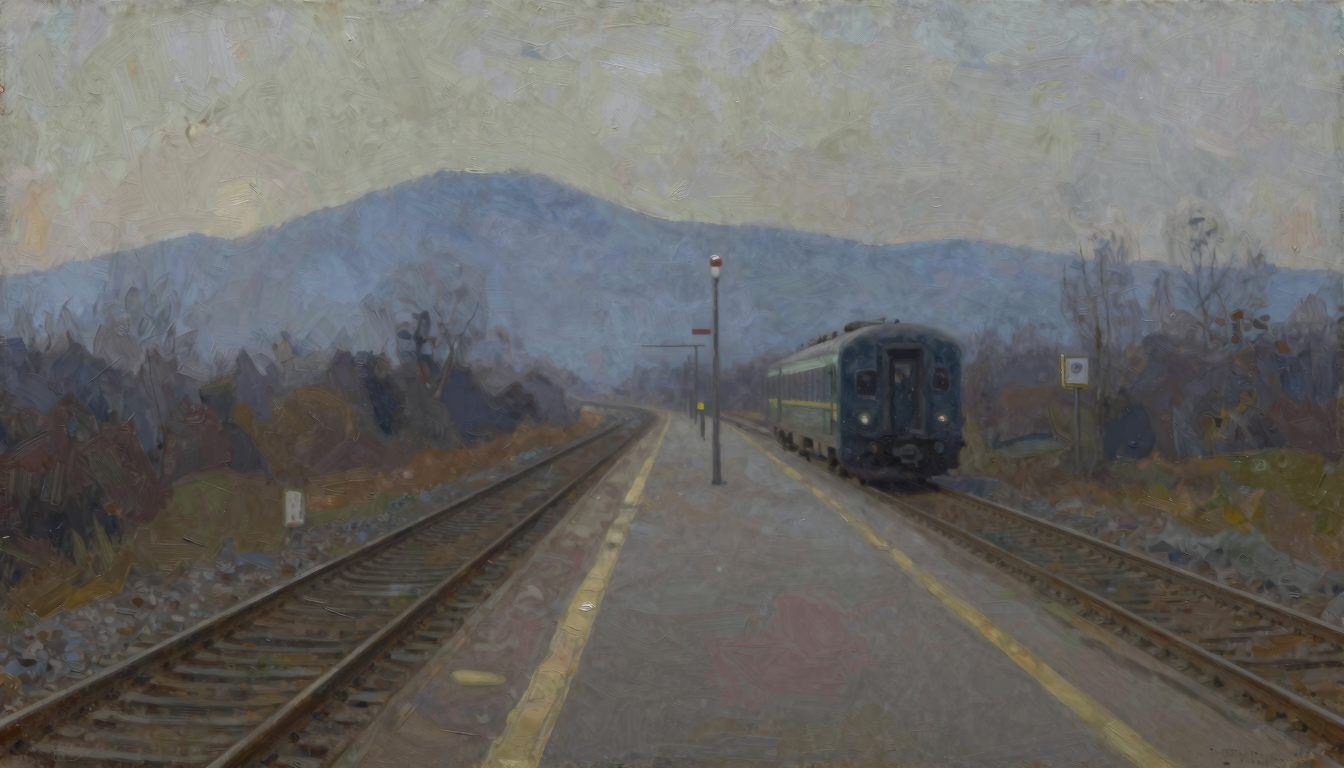
Summary
The setting of a dream about a train that leaves without you may show what kind of passage feels out of reach. A familiar station can point toward belonging or established duties; an unfamiliar one can suggest a transition whose direction is unclear. The departing train may symbolize separation from a shared path, while remaining on the platform may suggest a pause before commitment. These are possible symbolic readings, not a fixed classical verdict or prediction. Begin with where you stood, whether you wanted the journey, and what remained after departure.
At a glance
The setting of a dream about a train that leaves without you may show what kind of passage feels out of reach. A familiar station can point toward belonging or established duties; an unfamiliar one can suggest a transition whose direction is unclear. The departing train may symbolize separation from a shared path, while remaining on the platform may suggest a pause before commitment. These are possible symbolic readings, not a fixed classical verdict or prediction. Begin with where you stood, whether you wanted the journey, and what remained after departure.
Separate departure, passing and derailment; read place and desired route together.
Record setting, route, intention and ending; check one present commitment.
Train departure, missing a train, and spiritual meanings
Dream about train leaving without you
A train leaving without you may symbolize a passage continuing while you remain at its threshold. Because a train carries many people on one route, the separation can concern belonging as much as opportunity. A deserted platform may give the reading a cautionary tone of exclusion; a usable path away from it may suggest freedom from a route that no longer fits. Notice whether you wanted to board before calling the departure a loss.
What does dreaming of missing a train mean?
Missing a train may symbolize an opening whose timing and your readiness do not meet. The emphasis is the attempt to arrive: running toward the platform can suggest an intention without full preparation. Discovering another departure may carry a favorable tone of renewed access. A missed train does not establish that your chance in waking life has disappeared; distinguish the missed departure from the possibility of another route.
Why do I keep having dreams about trains?
Repeated train dreams may give an ongoing passage the same symbolic form: a route, a boundary, and a departure. If the scene changes from waiting to boarding, the symbolic emphasis can move from suspended commitment toward participation. If it stays unchanged, the image may invite another look at an unsettled choice. Recurrence alone cannot establish an external message. Compare the changing setting and ending rather than assigning a mystical meaning to the number of nights.
What does it mean when you dream about a train leaving you?
A train leaving you may make separation feel personal even when no one deliberately excludes you. Symbolically, the contrast between the moving carriage and the stationary dreamer can suggest being outside a shared chapter. Seeing the train leave from a place you know may concern an established circle; watching from unfamiliar ground may concern a new one. The scene cannot prove that another person intends to abandon you. Recall who, if anyone, was actually visible inside.
Train leaving dream meaning
A leaving train can symbolize the closing movement of one phase. Its departure may carry a favorable tendency when the journey felt unwanted, as though an unsuitable path continues without claiming you. It may carry a cautionary tendency when boarding felt meaningful, suggesting attention to an unattended opening. The movement itself is not automatically unlucky. What the train was leaving behind gives the departure its significance.
Dream about a train derailment
A derailment is a different symbol from a train leaving on its rails. It may suggest that a trusted course has lost its guiding structure: the route is interrupted rather than merely inaccessible. In a spiritual reading, that can become an image of questioning a path treated as inevitable. An intact platform and a departing train do not support this reading. Preserve that distinction, and do not treat a derailment dream as a forecast of an accident.
Dream about train leaving you
When your attention stays on being left, rather than on the train's destination, the symbolic concern may be a place in the group. An empty station can magnify separation; a station still in use can suggest that belonging is larger than one departure. This reading is especially tentative when the passengers are unknown. Ask what remained available where you stood, not only what moved away.
Why do I dream about trains?
There is no single cause established by a train image. Symbolically, rails give direction a fixed shape, a station gives transition a threshold, and a train joins personal movement to a collective journey. Those features can make the image useful when reflecting on a life passage. Their usefulness does not prove a supernatural origin. Start with the feature you remember most clearly before deciding which meaning fits.
What do trains signify in dreams?
Trains may signify movement along an established course rather than movement chosen at every turn. A train leaving without you can therefore suggest separation from a plan already in motion. Remaining outside may be cautionary if the course is wanted, or liberating if it is not. The station helps distinguish these possibilities: a place of welcome and a place of constraint give the same departure different tones.
What do trains mean in dreams?
As symbols, trains can bring together direction, timing, shared passage, and commitment to a route. These elements should stay separate: rails concern the course, departure concerns timing, and the carriage concerns participation. A dream focused on an empty seat differs from one focused on the station exit. Identify the strongest element rather than treating every train as one universal omen.
What does it mean if you dream of trains?
A train dream may invite reflection on how you enter, leave, or remain beside a path shared with others. Boarding can suggest participation; watching a departure can suggest witnessing a change without entering it. Neither is inherently favorable or unfavorable. The remembered setting and your willingness to travel help decide whether the image concerns an opening, a limit, or a release.
Dream about train derailment
If you were beside the tracks during a derailment, the symbolic issue may be witnessing the failure of a course you have not joined. If you were aboard, it may concern dependence on that course. Your position changes the reading, without making either scene a real-world warning. Do not add a crash to a dream that contained only departure; an interrupted route and a missed route carry different meanings.
Train spiritual significance
Spiritually, a train may represent passage within a larger rhythm: individual intention meets a route that exists beyond one traveler. Being left on the platform may symbolize a pause in joining that rhythm, rather than proof that life has rejected you. A station with an open exit can carry a hopeful image of another form of movement. Reflect on participation without turning the timetable into destiny.
Train spiritual meaning love
In a love reading, a train may symbolize the direction a relationship takes through shared commitments. Being left behind can suggest unequal readiness to enter the next phase; it cannot establish betrayal or an approaching breakup. A familiar station may emphasize an existing bond, while an unfamiliar one may emphasize uncertainty about a new commitment. Look at whether the journey was jointly wanted before assigning the separation to a partner.
Train meaning in spirituality
A spiritual interpretation can treat rails as a symbol of an accepted path and the station as a space of discernment before joining it. Remaining at the station may suggest that outer movement and inner assent have not yet met. That pause can feel cautionary when it conceals avoidance, or favorable when it preserves a needed choice. No religious authority follows from the image alone. Name the path you are considering before describing it as a calling.
Train passing spiritual meaning
A passing train differs from one you meant to catch. Symbolically, something can move through your field of attention without being your passage to take. That reading may suggest witnessing change, releasing an unnecessary claim, or recognizing that another person's journey has its own direction. If the train was only passing, absence from it need not mean exclusion. Preserve whether the dream contained an intention to board.
Train spiritual symbolism
The train's symbolic parts can form a small map of transition: rails may suggest continuity, the platform a threshold, carriages shared passage, and departure a boundary of timing. A train that leaves without you places you at the threshold while continuity moves elsewhere. This can invite discernment about belonging or commitment. It is a flexible spiritual reading, not a guaranteed omen or a verdict about your worth.
How the station changes the symbolic reading
The station is the place where a route becomes available. In a modern folk-style omen reading, such a threshold can suggest permission to enter a new phase, while a departure can suggest that permission feels temporary. A train is a modern image; assigning it an ancient universal verdict would give it authority the image does not establish. The useful reading comes from the relation between place, route, and the person standing outside.
A familiar station may symbolize an established place in life: a duty, household rhythm, or circle whose route you recognize. A departure from that setting can emphasize continuity without your participation. Its cautionary tendency concerns drifting outside something you still value. If you feel relieved as the train leaves, however, familiarity may have become obligation, and remaining behind can suggest release from an inherited course.
An unfamiliar station may symbolize a threshold whose rules are not yet clear. The departure can emphasize orientation before commitment: the route moves, but you have not established whether it is yours. This can carry a favorable tendency toward discernment rather than haste. A confusing place gives the reading less certainty, not more; an unknown destination should remain unknown in the interpretation.
A busy station can make one departure part of a wider circulation. Symbolically, other travelers and continuing activity may suggest that one missed passage does not exhaust the possibilities of movement. An empty station can make the same departure feel like a break in belonging. That contrast concerns the scene's symbolic tone; it does not guarantee that an alternative will appear or that a loss will occur.
An open station exit may symbolize agency outside the timetable. Remaining behind is then not the same as being trapped: the dream may offer movement on different terms. A blocked way out can give the platform a more cautionary meaning of waiting without direction. These readings apply only when those details were remembered; do not supply a door, crowd, or obstacle merely to produce a more dramatic omen.
Favorable and cautionary tendencies at departure
A favorable reading may arise when the train follows a route you did not want, while the place where you remain feels usable. The symbolic benefit is release from a mistaken alignment: you do not enter a journey merely because it is moving. A clear route away from the platform can deepen that possibility, giving separation the tone of regained choice.
A cautionary reading may arise when you wanted the destination but arrived without what was needed to enter. The symbolic concern is an opening left unattended, rather than a punishment imposed from outside. A familiar station can intensify the sense of obligation because its threshold was known; an unfamiliar one may emphasize learning how to enter before demanding passage.
Neither tone should erase the setting. A calm platform after an unwanted departure differs from an empty platform after a desired one. The first may suggest detachment; the second may suggest separation that deserves attention. Interpret the ending together with the route, then test the reading against an actual commitment. A dream cannot determine luck, loss, or the intentions of other people.
Work and responsibility
When a team begins a project while your role remains unclear, the departing train may symbolize a shared course whose entry point has passed unnoticed. A familiar station can represent established duties; standing outside can suggest a gap between membership and participation. The cautionary meaning concerns an unattended agreement, while a station still in use can suggest that a contribution remains possible through another opening. Check the actual assignment and ask for one clear handoff or revised starting point.
Money and security
When a financial offer has a deadline, the departure may symbolize pressure to join a route because others are already aboard. A familiar station can suggest an established pattern of saving or spending; an unfamiliar one can suggest terms you do not yet understand. Being left behind may carry a favorable tone if the route was unsuitable, or a cautionary tone if preparation was simply postponed. Check the costs and conditions before making one written decision; the dream supplies no evidence of profit or loss.
Relationships and belonging
When one person wants a new commitment and the other has not agreed to its direction, the train may symbolize a shared journey missing shared readiness. A known station can give the separation the weight of an existing bond; unfamiliar surroundings can suggest that the next phase has not acquired a common meaning. The spiritual emphasis is alignment of promises rather than possession of another traveler. Check what has actually been agreed, then arrange one conversation about the next step instead of treating the departure as proof of rejection.
Health and energy
When everyday obligations leave little room for rest, the train may symbolize a collective pace you feel unable to enter. Remaining on the platform can carry a favorable image of conserving the capacity needed for a meaningful journey. A closed or unusable station may instead symbolize a pause that has lost its purpose. This is an interpretation of rhythm and limits, not a medical conclusion. Check your present commitments and move one nonessential task to make a specific interval for rest.
Personal growth and change
When considering a course, move, or change of role, an unfamiliar station may symbolize the interval before a path feels inhabitable. The departing train can suggest that another person's timetable is being mistaken for your own readiness. A clear exit may carry the favorable possibility of choosing a different approach; an inaccessible route may emphasize preparation. Check which part of the transition remains unclear, then complete one practical step that lets you evaluate the route before committing.
A missed train before a new role
Maya is preparing to move from a small local team into a regional role. In her dream, she stands at a station she recognizes, holding a closed travel bag. A train pulls away before she steps aboard, but the station entrance remains open behind her. She wants the journey and feels disappointed rather than frightened.
She reads the familiar station as the place of her current duties and the departure as a possible image of entering a shared route before her responsibilities are settled. The open entrance gives the ending a more favorable tone: the threshold still offers movement, even though that train has gone. She does not take it as a promise that the new role will succeed.
Maya lists the work that needs a handoff and asks both managers to confirm the start date. They agree on a written transition plan, and her first week begins with named responsibilities instead of competing requests. The ordinary result is a clearer handoff. The dream gives her a way to frame the passage; it does not demonstrate that a prediction came true.
Choosing a reading from the remembered place
Describe the setting before naming the omen: was it familiar, unfamiliar, active, empty, or impossible to identify? Then separate what happened to the route from what happened to you. A departure leaves the course intact; a derailment interrupts it. A passing train may never have offered passage, whereas a missed one involves an intention to enter.
Next, read the ending for access. Remaining beside a usable exit may suggest agency outside the shared route. Remaining without any recognizable way forward may suggest an unsettled threshold. Finally, connect only one of those possibilities to a present commitment and check its real conditions. This keeps the symbolic reading tied to the scene instead of allowing a vivid departure to become a forecast of everything ahead.
Frequently asked questions
Does a train leaving without me mean bad luck?
Not necessarily. A desired departure may carry a cautionary tone of missed access, while an unwanted route may give remaining behind a favorable tone of release. Neither reading predicts luck or establishes a future outcome.
Why does a familiar station matter?
A familiar station may connect the passage to an established duty, relationship, or sense of belonging. An unfamiliar station may emphasize orientation before commitment. The setting narrows the symbolic possibility without proving it.
Is a passing train the same as a missed train?
No. A passing train may symbolize a change you witness without intending to join. A missed train includes an intention to board and may emphasize readiness, access, or separation from a desired course.
Do repeated train dreams prove a spiritual message?
No. Recurrence may give an ongoing transition the same symbolic form, but it cannot establish a supernatural origin. Compare the setting, your position, and the ending across the dreams rather than treating their frequency as proof.