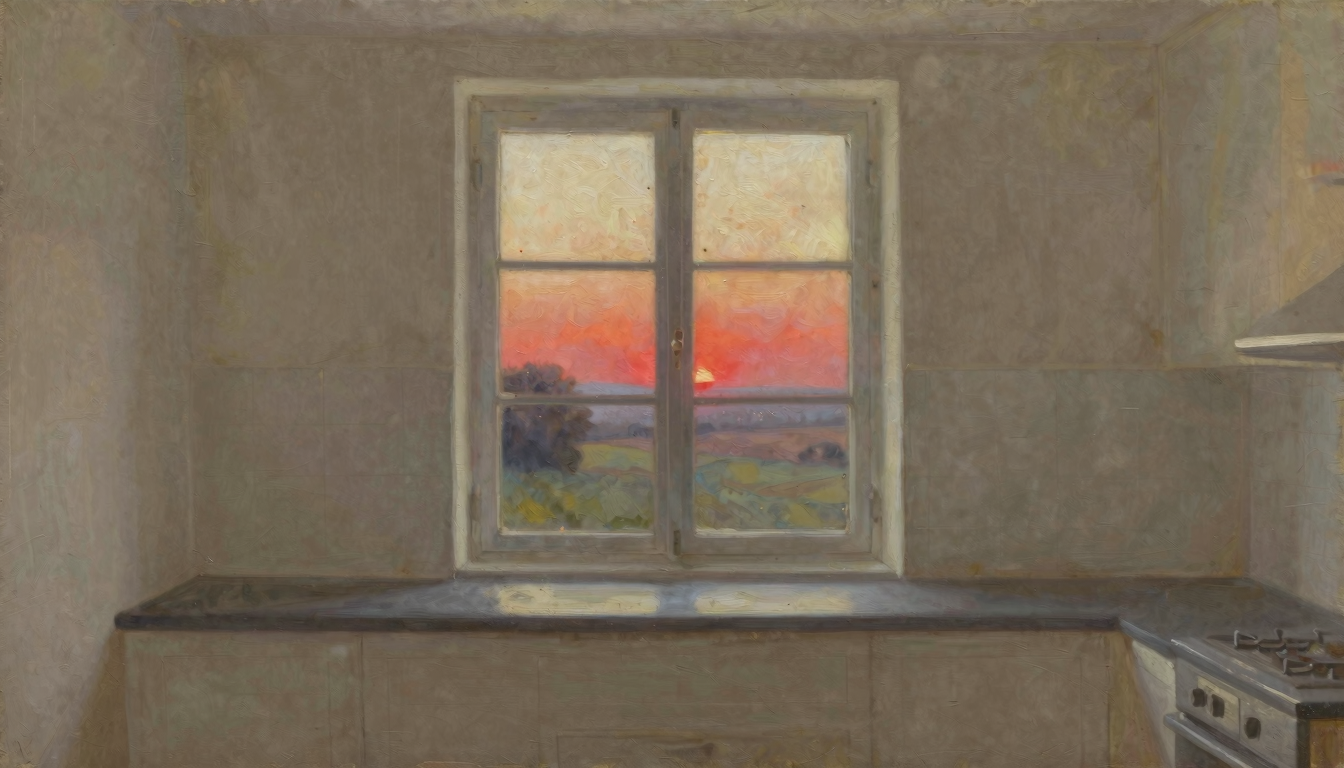
Summary
The setting can change a red sunrise from an image of welcome renewal to one of exposed uncertainty. Seen from a safe home, it may suggest a beginning you can approach gradually; seen on an unfamiliar road, it may emphasize entering a new stage without knowing the route. Red can add warmth, vitality, urgency, or unease according to the scene. These are possible symbolic readings. A dream sunrise or an actual red dawn does not establish a coming personal event.
At a glance
The setting can change a red sunrise from an image of welcome renewal to one of exposed uncertainty. Seen from a safe home, it may suggest a beginning you can approach gradually; seen on an unfamiliar road, it may emphasize entering a new stage without knowing the route. Red can add warmth, vitality, urgency, or unease according to the scene. These are possible symbolic readings. A dream sunrise or an actual red dawn does not establish a coming personal event.
Separates dawn seen from shelter, route and open space; distinguishes symbolic reading from physical color and superstition.
Record setting, light, company and agency; identify a beginning; check actual conditions and take one step.
A beginning belongs to the place where you meet it
Sunrise changes what can be seen. Darkness gives way to a landscape that was already present, while the observer gains a different view of it. Symbolically, this can suggest renewed awareness, a beginning, or the return of something usable after waiting. The setting tells you where that beginning meets your life.
Red adds a strong visual emphasis, but it does not supply one verdict. A gentle red horizon may feel warm and sustaining; a harsh red glare may feel urgent or uncomfortable. Read the color alongside the light, the landscape, and your response. Do not replace a remembered calm scene with a warning simply because the sky was red.
A new day can feel auspicious as an image of continuity: the world becomes visible again without requiring the dreamer to create the light. That hopeful symbolism remains conditional. It does not identify the exact opportunity, person, or outcome that waking life will provide.
At a familiar home: renewal with shelter
A red sunrise viewed from a familiar home may symbolize change held within a place of continuity. You can observe what is arriving while still having a room, a window, or a threshold that belongs to you. The image may suggest that beginning again does not require abandoning every familiar support.
Notice whether you look out willingly or feel unable to leave. A window can provide perspective; it can also mark a separation between observing and participating. The symbolic question may be whether shelter helps you approach change or has become a place from which you only watch it.
If the home was unfamiliar, keep that difference. An unknown room receiving dawn may suggest a beginning within a life arrangement that has not yet become yours. It is not the same as renewal in a trusted household, and neither scene predicts a move.
On a road: a beginning that asks for direction
A red sunrise on a road may emphasize movement rather than shelter. The day begins while you are between places. If the route is clear, the image may suggest readiness to proceed; if the light makes the way difficult to see, it may suggest that enthusiasm is arriving before orientation.
The sun's position matters only as remembered. Facing the dawn differs from seeing it behind you, but you do not need to attach a universal rule to a compass direction. Ask whether the light helped you travel or distracted you from the route.
A sunrise at the destination can also differ from one encountered mid-journey. Arrival places the new light over a place you have reached; a roadside dawn leaves the journey in progress. Do not supply an arrival when the dream ended before you got there.
Over water or open land: room and exposure
A red sunrise over calm water may symbolize a beginning reflected across an open surface. The repeated light can feel expansive or peaceful. If the water is rough, the same dawn may emphasize renewal alongside unsettled conditions. These alternatives apply only when the water actually appeared and its condition was clear.
Over open land, the sunrise may suggest a wider field of possibility. That openness can feel freeing or exposing, depending on whether you have a route or a place to stand. A mountain, shore, or field should not be added because it makes the interpretation more dramatic. The landscape you remember is the one that shapes the question.
The distinction is between space available and space navigable. An expansive horizon may offer hope without telling you what to do first. A small identifiable path can be more useful within the symbol than a promise attached to the whole sky.
Alone, accompanied, or looking from a distance
Watching the sunrise alone may emphasize a private beginning or the wish to choose your own pace. Being accompanied may bring attention to a shared transition. Notice whether the other person watches with you, leads you, or prevents you from seeing. Presence alone does not reveal that person's intentions.
If the sunrise appears far away while your own surroundings remain dark, the image may suggest a beginning you can perceive before it reaches your immediate situation. That can invite patience or preparation without establishing a timetable. A visible horizon is not a dated promise.
A spiritual reflection may treat dawn as renewal, awakening, or the opportunity to begin with greater attention. The setting keeps that reflection concrete: what is becoming visible, and what part of life could receive it? No particular religious message follows solely from the color of the sky.
Work: see the beginning and the conditions around it
At work, a red sunrise may symbolize energy returning to a project or a new stage becoming visible. A sheltered viewpoint can suggest time to prepare; an exposed road can suggest beginning while the plan remains uncertain. Check whether the actual opportunity includes a defined task, support, and a next step.
One action is to identify the first workable piece rather than committing to the entire horizon. Symbolically, the dawn provides light; it does not build the route. Use that distinction to separate feeling ready from having the conditions needed to proceed.
Relationships: shared renewal and different vantage points
In a relationship, the sunrise may suggest a renewed chance to see a familiar situation differently. Watching together can feel hopeful, but two people in the same scene may still have different views. Check whether a real conversation has changed the arrangement or whether only your expectation has changed.
A useful next action is to clarify one shared intention. The symbolic beginning gains substance through an agreement, such as how you will approach a difficult topic or make time for each other. A red sky cannot confirm reconciliation or tell you what someone else feels.
Money: warmth does not establish a return
Around money, a vivid dawn may symbolize optimism after an uncertain period. Its intensity can also resemble the urgency to act before an opportunity disappears. Check the actual terms, available resources, and time needed for a decision. The dream does not establish profitability or a financial turning point.
One action is to define what you need to know before committing. The setting offers a useful contrast: observing from a secure position differs from stepping into an unfamiliar landscape without a route. Let the real arrangement determine what is manageable.
Home and family: a new day inside continuing obligations
At home, sunrise may symbolize a routine becoming possible again or a household entering a changed stage. A familiar window can suggest continuity while the light changes outside. Check which daily responsibility actually needs a new arrangement rather than assuming that renewal will happen by itself.
Choose one repeatable act, such as agreeing who handles the morning preparation. Symbolically, the day begins everywhere, but a household still needs a workable rhythm. A hopeful scene can support that reflection without forecasting an improvement in family circumstances.
A dawn seen from a place she could use
Consider Leah, who is returning to a work project after a household move. In a dream, she watches a red sunrise through a familiar kitchen window. The light is warm, and she can see a clear path outside. She stays inside long enough to finish a simple task before opening the door.
She reads the setting as a possible image of beginning with support rather than rushing into change. She checks what the project needs, prepares the first task the evening before, and agrees a morning routine with the person sharing her home. She does not treat the red sky as proof that the project will succeed.
During the next few days, the first task is completed and the morning schedule becomes easier to follow. The ordinary result comes from preparation and an agreement. The dream gives her a picture of a beginning she can approach; it does not cause or predict the outcome.
Separate the sky's color from a personal verdict
An actual red sunrise has an ordinary physical explanation. Near the horizon, sunlight travels through a longer path in the atmosphere; scattering reduces more of the shorter-wavelength light, leaving warmer colors more prominent. Clouds and airborne particles can affect what you see. Color alone does not identify a personal omen.
A superstition may attach a warning or favorable result to red dawn. That belief should remain distinct from a symbolic reflection and from a factual forecast. If you need to assess real conditions, use the relevant observations rather than relying on the color as a complete answer.
For a dream, record the setting, quality of light, company, and your ability to act. Choose the closest question about beginning, visibility, or readiness. Check one waking fact and take a proportionate step. The same red sunrise can carry different possible meanings because you meet it from different places.
Frequently asked questions
What does a red sunrise mean?
An actual red sunrise is an atmospheric color effect. In a dream or personal symbolic reflection, it may suggest renewal, warmth, vitality or urgency. The setting and your response distinguish these possibilities; the color does not establish a future event.
What causes a red sunrise?
Near the horizon, sunlight passes through a longer atmospheric path. Scattering removes more shorter-wavelength light from the direct view, making red and orange more prominent. Clouds and airborne particles can affect the appearance. A specific morning’s cause cannot be identified from color alone.
What does a red sunrise symbolize?
Red dawn can be read as a vivid beginning, renewed energy or a sense of urgency. A safe viewpoint may emphasize supported renewal; an uncertain road may emphasize readiness and direction. These are possible symbolic readings rather than universal rules.
What is the spiritual meaning of sunrise?
Sunrise may be considered a metaphor for renewal, awakening or seeing a familiar life more clearly. Ask what is becoming visible and what you are ready to begin. It does not by itself establish a message from an outside power or a specific religious ruling.
Does a red sunrise have a definite meaning in the Bible?
This article does not establish a specific Biblical interpretation for a red sunrise dream or personal sign. A symbolic reflection about renewal should remain separate from a claim of scriptural authority or a guaranteed divine outcome.
What should I make of a red sunrise superstition?
A superstition may attach favorable or unfavorable expectations to the sky. That belief is distinct from a personal metaphor and from an evidence-based assessment of actual conditions. A red sunrise alone does not predict what will happen to you.
How does watching sunrise from home differ from seeing it on a road?
Home can suggest renewal held within shelter and continuity; a road can suggest beginning while moving between places. Notice whether the setting helps you act or leaves you watching. Neither scene predicts a move or journey.
Does a red sunrise over water always mean the same thing?
No. Calm water can suggest reflection and openness, while rough water can place renewal alongside unsettled conditions. Apply those alternatives only if the water and its condition appeared in the remembered scene.