Summary
Dreaming about a peacock may symbolize becoming visible, taking pleasure in what you have developed, or uncertainty about how appearance relates to substance. A welcome display may emphasize confidence and appreciation; an aggressive encounter may emphasize attention that feels intrusive. A feather can bring the meaning to one valued detail. These are conditional symbolic readings, not guarantees of wealth, romance, status, or good luck. Notice what the bird does, who watches, and how you feel about the attention before choosing a meaning.
At a glance
Dreaming about a peacock may symbolize becoming visible, taking pleasure in what you have developed, or uncertainty about how appearance relates to substance. A welcome display may emphasize confidence and appreciation; an aggressive encounter may emphasize attention that feels intrusive. A feather can bring the meaning to one valued detail. These are conditional symbolic readings, not guarantees of wealth, romance, status, or good luck. Notice what the bird does, who watches, and how you feel about the attention before choosing a meaning.
Separates chosen display from demanded performance and one feather from possessing the source.
Record display and audience; compare actual situation; show one result or clarify attention.
A display can invite appreciation or comparison
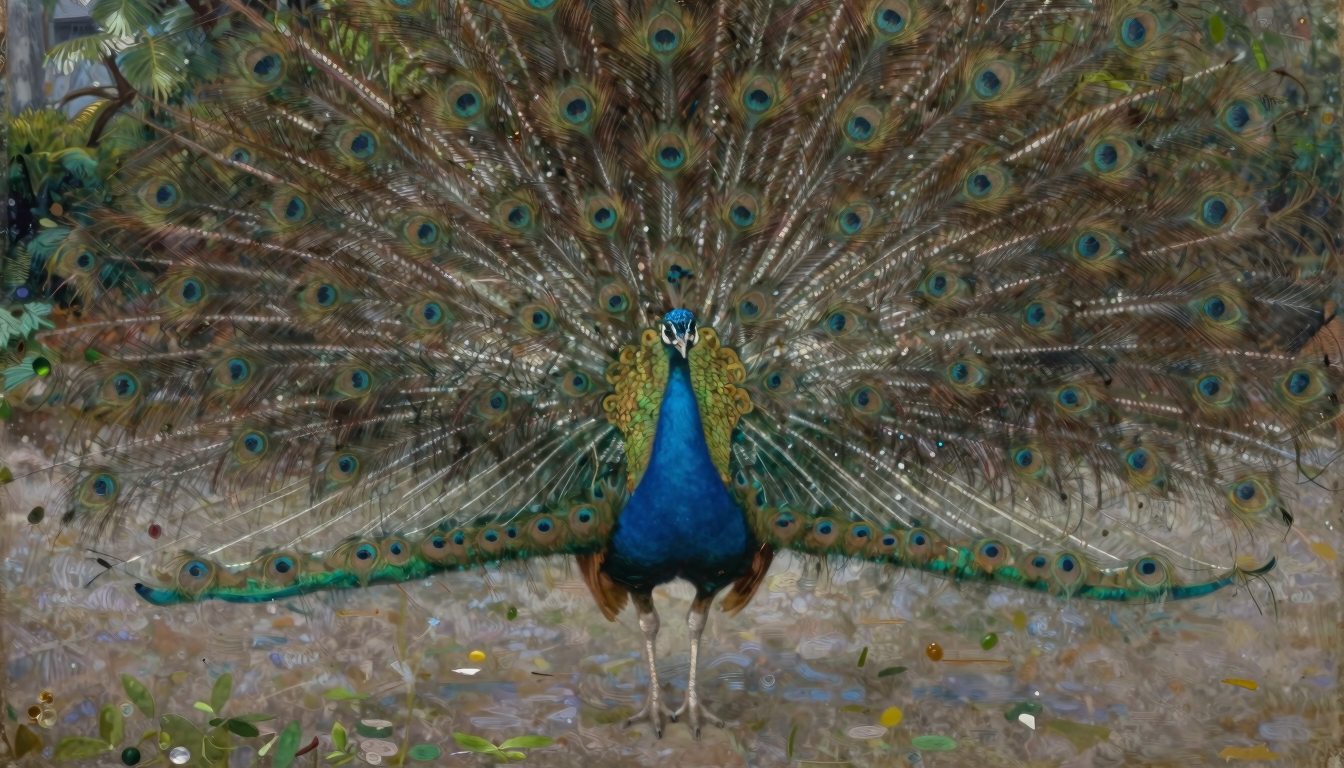
A peacock may give visibility a vivid form within a dream. Its presence can draw the eye before anything else happens. Symbolically, that may concern showing something, being noticed, or deciding how much space a presentation should occupy.
If the display delights you, the scene may suggest appreciation without rivalry. If you feel smaller beside it, the emphasis may move toward comparison. If you are indifferent, the bird's appearance may be less important than its action.
Seeing a peacock does not prove that you or someone else is vain. Pride can mean satisfaction in real effort as well as dependence on admiration. The dream's relationship with the display helps distinguish those possibilities.
An open tail differs from a closed one
An open tail may symbolize making a quality or achievement visible. The scene can emphasize readiness to show something that has taken time to develop. Whether anyone responds matters less than what the act of opening changes.
A closed tail may suggest a presence whose full expression remains private. If you wait for it to open, the dream may concern an expectation of performance. If the bird moves comfortably without displaying, the image may suggest value that does not need constant demonstration.
Neither position guarantees recognition. Ask whether the bird appears freely or under pressure. A chosen display and a demanded one can carry different symbolic meanings even when they look similar.
A feather can keep attention on one detail
A peacock feather in a dream may symbolize a trace of beauty, a keepsake, or one detail carrying more meaning than the whole display. Finding a feather differs from taking it from the bird. The first may emphasize noticing; the second can introduce possession.
If you hold the feather gently, the scene may suggest appreciating something without needing to own its source. If you lose it, the question may concern how much meaning you have placed in a single object or sign.
The feather does not establish protection, luck, or a spiritual message. Notice what it means within the encounter. Its symbolic usefulness can remain in your relationship with the detail rather than a promised effect.
Flight can move visibility into a different setting
A flying peacock may symbolize an expression or aspiration moving beyond its familiar place. Watching it rise may emphasize possibility, while trying to keep it nearby may emphasize concern about losing control of something admired.
A peacock flying high can intensify the distance between what you see and what you can reach. The scene may suggest ambition or perspective, but height does not predict promotion or success. Notice whether the flight has direction or simply becomes remote.
If the bird lands somewhere ordinary, the image may return attention to what expression requires after a striking moment. A display can be meaningful without becoming a permanent condition of your life.
A peacock in the house brings display into private life
A peacock inside your house may symbolize a visible presence entering an arrangement usually associated with familiarity. If it occupies the whole room, the scene may emphasize attention crowding other needs. If everyone welcomes it, the meaning may concern shared pleasure.
Notice whether you try to move the bird, care for it, or show it to visitors. Those actions may distinguish living with a valued quality from presenting it for approval. The house does not have one fixed symbolic meaning independent of what happens there.
The dream does not establish that a real person is showing off or invading your space. Compare the arrangement with actual behavior before assigning the bird a waking identity.
Attack and pursuit can make attention uncomfortable
A peacock attacking may symbolize friction around visibility or a presence that demands more space than you want to give. Beauty and discomfort can coexist within the scene. An attractive appearance does not make the interaction welcome.
A peacock chasing you may emphasize a pressure to respond, perform, or remain involved. Notice whether you seek distance, speak, or find a different setting. The pursuit does not prove that someone is pursuing you in waking life.
Read the preceding action and aftermath rather than declaring a threat. A dream can make attention feel forceful without supplying evidence about another person's intention.
Several birds can emphasize a shared audience
Many peacocks may symbolize several visible qualities or competing presentations in one setting. If they coexist peacefully, the scene may suggest room for different expressions. If you cannot move among them, it may emphasize attention becoming crowded.
The number does not count future opportunities or admirers. Ask what happens when there is more than one display. Do you compare, enjoy, withdraw, or try to choose? Your response can make the symbolic question more specific.
A baby peacock may suggest an emerging capacity to express something or a quality that needs time. Its presence does not predict a birth. A young bird can symbolize development without announcing an event.
A dead bird can change the meaning of recognition
A dead peacock may symbolize the end of a display, sadness about lost expression, or a quality no longer occupying its former place. If the scene feels quiet, it may emphasize release from the demand to be noticed. If it feels sorrowful, the question may concern what you valued in that presence.
The image does not predict death or failure. It may simply bring an ending into a symbol associated with visibility. Notice whether you remember the bird's movement, keep a feather, or leave the scene.
An ending can remain uncertain. You do not have to find a waking loss to make every detail correspond with life.
Color can alter emphasis without assigning a fate
A white peacock may emphasize simplicity, contrast, or an unusual kind of visibility. A black peacock may make the presence feel mysterious or subdued. Neither color automatically means blessing or danger.
A pink peacock may emphasize tenderness, play, or an imagined appearance that feels unlike an ordinary animal. Read whether the color delights, surprises, or distracts you. A dream's unusual color does not need a literal counterpart.
Color can be personally meaningful while remaining flexible. The bird's action and your relationship with its display provide a firmer starting point than a fixed color-to-outcome rule.
Spiritual and cultural reflections should remain open
A spiritual reading may consider the peacock as an image of appreciating beauty while examining the place of admiration. A peaceful display may invite gratitude; an intrusive one may raise a question about how attention is used. Neither establishes a supernatural message.
For Islamic or Biblical meaning, no fixed religious ruling or scriptural result is asserted here. The dream does not establish divine approval, punishment, or another person's moral character. Personal reflection can consider humility and care in judging appearances without claiming a revelation.
A Hindu framing likewise does not determine a universal forecast from this scene. Tamil, Hindi, Telugu, Marathi, and Kannada are languages in which an interpretation can be discussed; language alone does not prove a separate omen. Cultural associations may matter to you while the actual action and feeling remain necessary.
Four settings can clarify visibility
At work, a peacock may symbolize presenting an achievement. You may want your contribution noticed but be unsure how to describe it. Check what you actually completed and share one concrete result. Visibility becomes grounded when the display points to real work.
In relationships, the bird may symbolize enjoying attention or feeling pressured to provide admiration. Check whether affection leaves room for ordinary needs. Express one preference without treating the dream as proof of vanity or manipulation.
At home, a bird occupying the room may resonate with a visible project taking more space than expected. Check how the shared arrangement is affected. Agree on one practical limit so appreciation and everyday use can coexist.
In creative life, the tail may symbolize work ready to be shown. You may keep revising because you cannot predict the audience's response. Check the purpose and choose one limited setting for sharing. Feedback can inform the next step without deciding your worth.
Showing one result can reduce imagined judgment
Consider Isabel, who dreams of a peacock opening its tail while she stands behind a garden gate. She wants to look closely but worries that everyone will watch her watching. The bird remains still while she hesitates.
Isabel has finished a small photography series but has not shown it to her local group. She reads the display as a possible image of work becoming visible and her hesitation as uncertainty about reception, rather than a promise of admiration.
She chooses three photographs and shares them at the next meeting, explaining the light she was trying to capture. One member praises a composition and another suggests a different crop. Isabel revises one image and keeps the others. The result is ordinary feedback: her work becomes visible, and the response gives her something specific to assess instead of an imagined verdict.
Read display and relationship together
Record whether the peacock displays, flies, enters, attacks, or remains still. Then note who watches and how you respond. Distinguish appreciation, comparison, expression, and pressure through the actual encounter.
Compare one detail with a real situation and check what is known. When a connection fits, show a concrete result, state a preference, or clarify a shared arrangement. When it does not fit, allow uncertainty.
A peacock may give visibility an impressive shape. Its useful symbolic meaning can concern how you show and appreciate something, while waking outcomes remain open to actual responses rather than promised recognition.
Frequently asked questions
What does seeing a peacock in a dream mean?
A peacock may symbolize visibility, appreciation or comparison. Your response and the bird's action distinguish these meanings without proving vanity.
What does a peacock feather mean in a dream?
A feather may symbolize a valued detail or trace of beauty. Finding and taking it differ; it does not establish protection or good luck.
What does a flying peacock mean?
Flight may symbolize expression moving beyond a familiar setting. It does not predict success or separation; notice direction and your response.
What does a peacock flying high mean?
Height may emphasize aspiration or distance from something admired. It does not forecast promotion or count future opportunities.
What does a peacock in my house mean?
The scene may bring a visible presence into a private arrangement. Notice whether it is welcome or crowds other needs rather than blaming a real person.
What does a peacock attack mean in a dream?
An attack may symbolize friction around attention or space. Beauty and discomfort can coexist; the scene does not establish a waking threat.
What does a peacock chasing me mean?
Pursuit may symbolize pressure to respond, perform or remain involved. It does not prove that a real person is pursuing you.
What do many peacocks mean in a dream?
Several birds may symbolize different expressions or competing presentations. Read whether they coexist or crowd you, without counting future admirers.
What does a baby peacock symbolize?
A young bird may symbolize an emerging capacity for expression that needs time. It does not predict a birth.
What does a dead peacock mean?
A dead bird may symbolize an ending or change in the place of recognition. The image predicts neither death nor failure.
What does a white peacock mean in a dream?
White may emphasize simplicity, contrast or unusual visibility. It does not guarantee blessing or good news.
What does a black peacock mean in a dream?
Black may make the presence feel mysterious or subdued. It does not establish danger or misfortune.
What does a pink peacock mean in a dream?
Pink may emphasize tenderness, play or an imagined appearance. Read the feeling and action rather than assigning a fixed event.
What is a peacock dream meaning in Islam?
No fixed Islamic ruling is asserted. Personal reflection may consider humility and appearances, while the dream establishes no punishment or divine approval.
What is a Biblical peacock dream meaning?
No scriptural result or divine instruction is established here. A reader may reflect on appreciation and humility without calling the scene a revelation.
What does a peacock mean in Hindu dream interpretation?
The image does not determine a universal Hindu forecast. Cultural associations may inform reflection while context remains necessary.
What is a peacock dream meaning in Tamil or Hindi?
Tamil and Hindi are languages in which interpretations can be discussed, not proof of distinct omens. The same conditional distinctions about display and response remain useful.
What is a peacock dream meaning in Telugu?
Telugu-language discussion does not by itself establish a fixed outcome. Read the bird's action, setting and your response.
What is a peacock dream meaning in Marathi?
Marathi identifies a language rather than a universal omen. Personal associations may matter without guaranteeing luck, wealth or status.
What is a peacock dream meaning in Kannada?
A Kannada-language explanation can discuss visibility and expression conditionally. Language alone does not determine the meaning of the scene.
What can I do after having a dream about a peacock?
Compare one detail with actual expression or attention. Show a concrete result or clarify a shared arrangement if the connection fits; otherwise allow uncertainty.