Summary
Dreaming about frogs may symbolize a transition, a new way of responding, or something small and unfamiliar entering ordinary life. A frog resting beside water differs from tadpoles developing, frogs jumping onto you, or many frogs filling your home. These are conditional symbolic readings, not predictions of luck, illness, or a religious verdict. Notice the setting, movement, stage of growth, and whether the encounter feels welcome or intrusive.
At a glance
Dreaming about frogs may symbolize a transition, a new way of responding, or something small and unfamiliar entering ordinary life. A frog resting beside water differs from tadpoles developing, frogs jumping onto you, or many frogs filling your home. These are conditional symbolic readings, not predictions of luck, illness, or a religious verdict. Notice the setting, movement, stage of growth, and whether the encounter feels welcome or intrusive.
Distinguishes stages of growth and the conditions for development from mere intensity of change.
Record stage setting movement contact ending; check preparation; try one bounded step.
The frog can make change visible through movement between environments. Its symbolic interest is not simply that something becomes different, but that a familiar way of living may no longer fit every situation. The dream may invite attention to the conditions that allow a change to happen.
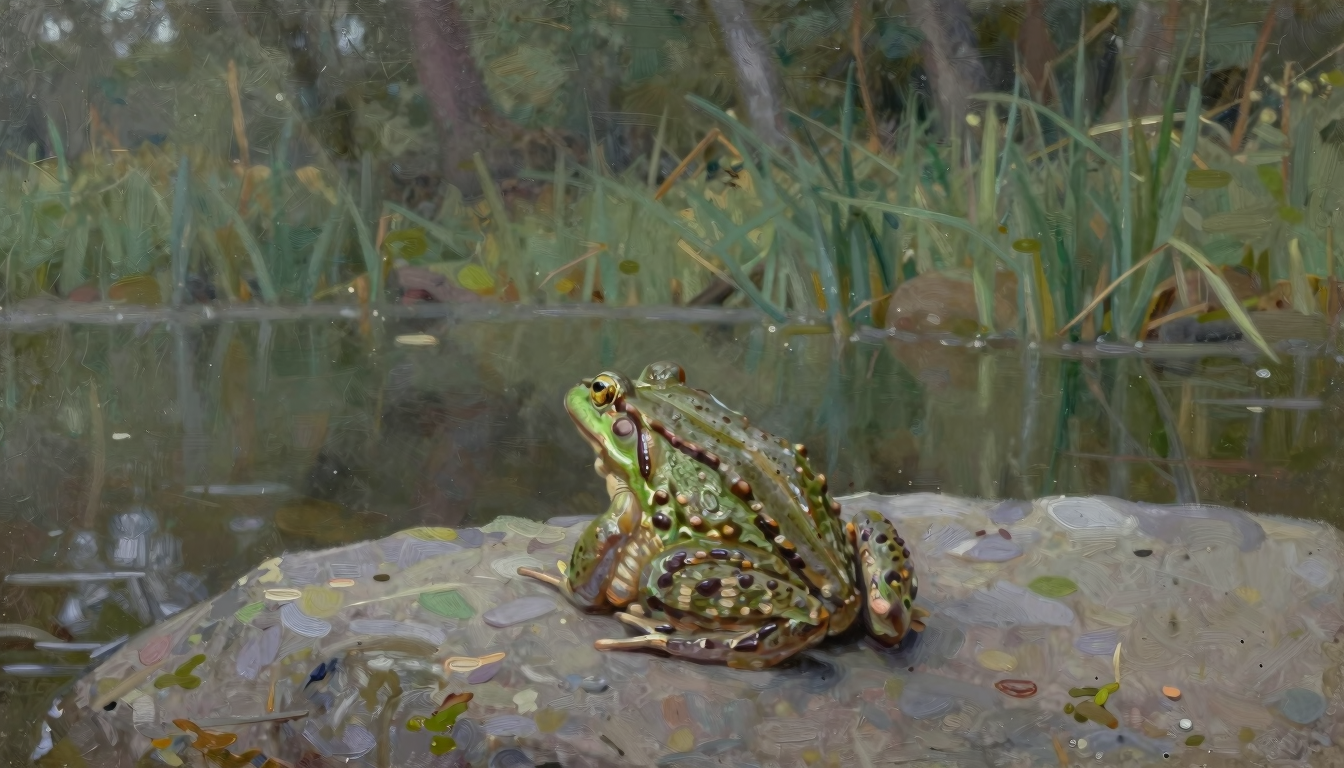
A frog at the edge of water
A frog resting where water meets land may symbolize a threshold between two ways of responding. Water can evoke feeling, depth, or a situation you cannot entirely control; land can evoke steadiness and visible action. Neither association supplies a universal code.
If the frog moves easily between them, the image may suggest flexibility. If it cannot find a place to rest, it may express difficulty adjusting to a changed setting. The useful distinction is between movement that supports life and movement that leaves you unsettled.
Seeing one frog without any dramatic action may bring a modest possibility into focus. The dream need not describe a major transformation. A small change in how you approach a recurring situation can be enough to give the image meaning.
Tadpoles and a change still developing
Dreaming about frogs and tadpoles may symbolize different stages of the same process. Tadpoles can evoke a beginning that depends strongly on its surroundings, while frogs may suggest a form able to operate more widely. This is a symbolic comparison, not a promise that a plan will mature.
Seeing both together may raise a question about timing. Are you expecting something new to perform like something established? A pond with room for both can suggest allowing development without forcing a single pace.
If the tadpoles disappear or the water dries, the image may emphasize the conditions around a fragile beginning. If a frog leaves the pond, the scene may bring attention to what happens after preparation. Growth and readiness are related, but they are not identical.
Frogs jumping onto you
Frogs jumping on you may symbolize change arriving through direct contact rather than quiet observation. Surprise may matter more than fear. A single leap can suggest an unexpected invitation; repeated jumping can make a modest issue feel impossible to ignore.
Your response changes the interpretation. Welcoming the frog may evoke curiosity about something unfamiliar. Trying to brush it away may suggest a wish for control over how and when new experiences approach.
If the frog leaves without harming you, retain that ending. Unwanted contact within a dream does not establish danger in waking life. The scene may concern the discomfort of adjustment rather than an actual threat.
Frogs everywhere and a crowded transition
Frogs everywhere may symbolize many small changes occurring at once. A lively landscape can feel abundant and open. A scene in which you cannot take a step without encountering another frog may instead express crowding or difficulty finding a familiar route.
The number alone does not determine whether the dream is favorable. Notice whether the animals occupy an appropriate place or spread into spaces where you cannot use the room normally. The difference can distinguish a developing environment from a transition that has taken over daily routines.
Sound, movement, and the ending can also help. Frogs settling may suggest that the activity is finding a rhythm. Continuous leaping can keep the emphasis on unpredictability. You do not need to turn every animal into a separate problem.
Frogs in the house and in the bed
Frogs in the house may symbolize a change entering familiar habits. A frog near the entrance can evoke something newly admitted; in a shared room, an adjustment that affects several people. The house does not automatically convert the image into a sign of fortune or misfortune.
The spiritual meaning of frogs in the house may concern making room for renewal while preserving a place to live. If the encounter feels calm, the image can suggest accepting a new rhythm. If every room is crowded, it may invite reflection on boundaries around that change.
Frogs in your bed bring the unfamiliar into rest and privacy. The scene may symbolize an adjustment that follows you when you want to stop attending to it. A frog quietly resting differs from one repeatedly leaping across the covers.
Removing it gently or finding another place to sleep may symbolize restoring a workable space. The dream does not establish a spiritual invasion, contamination, or a medical condition.
Green brown black and white frogs
A green frog may evoke freshness, growth, or a close relationship with the surrounding landscape. If it blends into the setting, the image can suggest a change that fits naturally. If its color is unusually bright, the newness may feel more conspicuous.
A brown frog may bring associations of earth, ordinary life, or a modest change that is easy to overlook. It can suggest attention to something practical rather than spectacular. Brown is not an automatic sign of decline.
A black frog may emphasize uncertainty or difficulty reading what approaches. That association concerns visibility and feeling, not proof of evil. A quiet dark frog and a threatening encounter should not receive identical interpretations.
A white frog may evoke clarity, unfamiliarity, or a fresh beginning, depending on your associations. It does not establish purity, spiritual approval, or guaranteed luck. For every color, the animal's action and the setting remain essential.
Large frogs and dead frogs
A big frog may symbolize a modest transition occupying an unusually large place in your attention. Its size can make change feel undeniable. If it rests calmly, the scene may emphasize importance without urgency; if it blocks your route, the emphasis may be on access.
Dead frogs may symbolize an interrupted transition, an ending, or a possibility you no longer feel able to pursue. Sadness differs from relief. Finding a dead frog before anything happens differs from seeing one after a struggle.
The image is not a forecast of death or failure. It may help distinguish a process that needs different conditions from one you are ready to close. Record the sequence before assigning an outcome to it.
Frogs with snakes toads turtles or spiders
Frogs and snakes may bring change alongside caution, concealment, or a powerful movement through the same space. If a snake pursues a frog, vulnerability becomes part of the scene. If both rest quietly, coexistence may matter more than conflict.
Frogs and toads can invite attention to familiar-looking possibilities that feel different. One may seem lively and another grounded, but those associations depend on your experience. Avoid turning similar appearance into a fixed rule about good and bad outcomes.
Frogs and turtles may contrast quick adjustment with a slower protected pace. Their movement can suggest that different parts of a situation do not need to change at the same speed. Notice whether one follows, obstructs, or simply shares the setting with the other.
Frogs and spiders may place spontaneous movement beside a more deliberate arrangement. A frog moving around a web differs from one caught in it. The scene may concern whether a new response fits an existing structure, rather than proving a trap exists in waking life.
Spiritual and religious ways of reflecting
A spiritual frog dream may invite reflection on renewal, receptivity, and the conditions that support a transition. The symbolic question is whether you are allowing a new response to develop or demanding an immediate finished result.
A Biblical or Christian reading should consider the actual scene and your faith context. The animal's presence alone does not establish a specific scriptural message, divine punishment, or a promised blessing. Familiar religious associations do not make every frog dream carry the same meaning.
For an Islamic reading, no binding conclusion about fortune, hostile intentions, or a required action follows from the image here. Personal circumstances and qualified religious guidance matter. Quiet observation, crowded movement, and direct contact remain distinct experiences.
In a Hindu framing, your own devotional and cultural associations may influence reflection on change and renewal. No universal religious verdict is established by this dream. Keep personal meaning separate from a claim about destiny.
A Tamil-language interpretation can explain the same distinctions in the reader's preferred language; language itself does not change the meaning or establish a religious identity. If you are looking for an Auntyflo interpretation, its particular wording is not reproduced here. This reading follows the frog's actions and setting rather than attributing claims to that source.
Applying a transition to ordinary life
At work, tadpoles and frogs may resemble a new task alongside established duties. Check what preparation the task still needs. Agree on one intermediate result before expecting it to operate at full scale.
In relationships, a frog jumping onto you may resemble an unexpected proposal or change of routine. Check what is actually being requested. Ask for a clear time and scope so surprise does not become an assumed obligation.
At home, frogs everywhere may symbolize several adjustments arriving together. Check which one makes the biggest difference to using the space. Complete that change first and give the rest a sequence instead of treating them all as immediate.
In a personal project, a frog at the water's edge may symbolize readiness to move beyond preparation. Check what can be tried without committing the whole project. Take one bounded step and observe its result before deciding the next.
A modern example of letting a beginning develop
Dylan dreamed of a shallow pond with tadpoles near the edge and one frog resting on a stone. He tried to lift the tadpoles onto the stone, but returned them to the water when they slipped away. The frog remained still while the tadpoles moved freely below.
He was organizing his first neighborhood drawing session. He had planned a full afternoon with several activities before finding out how many people wanted to attend. Preparing every detail had made the small idea feel difficult to begin.
Dylan offered one hour with a single activity and asked participants afterward what they wanted next. Six neighbors attended, and their feedback helped him choose the following session. The ordinary result came from giving the beginning suitable conditions rather than expecting it to resemble a mature program immediately.
Reading movement and readiness together
Record the stage of growth, location, movement, contact, and ending. Separate quiet observation from intrusion, one change from many, and a developing possibility from an interrupted process.
A frog dream may help you consider how change becomes livable. Its useful meaning can lie in finding the setting, pace, and first step that let a new response develop without taking over everything around it.
Frequently asked questions
What does a frog dream generally symbolize?
A frog may symbolize transition, adjustment, or an unfamiliar possibility. Its setting, movement and growth stage shape the reading.
What does a frog dream dictionary mean by transformation?
Transformation is a starting association, not a prediction. A frog finding a suitable setting differs from one unable to rest.
What does dreaming about frogs in water mean?
Water may evoke feeling or conditions around a change. Easy movement differs from being trapped or losing the water needed for development.
What does dreaming about frogs and tadpoles mean?
They may symbolize different stages of a process. Consider what preparation a beginning needs before expecting a finished result.
What does dreaming about frogs jumping on me mean?
Jumping may bring change into direct contact through surprise or intrusion. Welcoming it differs from trying to remove it.
What does dreaming about frogs everywhere mean?
Many frogs may symbolize simultaneous adjustments or crowded change. Notice whether the setting remains usable.
What does dreaming about frogs in the house mean?
It may bring a transition into familiar routines. The room and action help distinguish acceptance from crowding.
What is the spiritual meaning of frogs in the house?
It may invite making room for renewal while preserving a livable space. It does not establish invasion or guaranteed fortune.
What does dreaming about frogs in my bed mean?
It may bring adjustment into privacy and rest. A quiet frog differs from repeated jumping that prevents settling.
What does a green frog mean?
Green may evoke freshness and growth. Read the color with the animal’s action rather than as a promise of luck.
What does a brown frog mean?
Brown may evoke ordinary practical adjustment. It does not automatically signify decline.
What does a black frog mean?
Black may emphasize uncertainty or difficulty reading a situation. It does not prove evil or danger.
What does a white frog mean?
White may evoke clarity, unfamiliarity or a fresh beginning. It does not establish purity or spiritual approval.
What does a big frog mean?
Size may suggest a modest transition occupying considerable attention. Calm importance differs from blocking your route.
What does a dead frog mean?
It may symbolize an interrupted possibility or closure. Relief, sadness and sequence help distinguish the reading; it is not a death forecast.
What does dreaming about frogs and snakes mean?
The mixture may place adjustment beside caution or powerful movement. Coexistence differs from pursuit or conflict.
What does dreaming about frogs and toads mean?
Similar-looking animals may evoke possibilities with different feels. Follow their behavior rather than a fixed favorable or unfavorable rule.
What does dreaming about frogs and turtles mean?
It may contrast quick adjustment with a slower protected pace. Different parts of a situation may develop at different speeds.
What does dreaming about frogs and spiders mean?
It may place spontaneous movement beside a deliberate structure. Moving around a web differs from being caught.
What is a spiritual frog dream meaning?
It may invite reflection on renewal and the conditions supporting change. It is not proof of destiny.
What is a Biblical or Christian frog dream meaning?
Reflect within your faith and the actual scene. The image alone establishes neither punishment nor a specific scriptural message.
What does a frog dream mean in Islam?
No binding conclusion about fortune, hostility or required action follows here. Personal context and qualified guidance matter.
What does a frog dream mean in Hinduism?
Personal cultural or devotional associations may shape reflection. No universal religious verdict is established here.
Does a Tamil frog dream meaning differ?
Tamil can be the language used to explain the scene. Language itself does not supply a separate fixed meaning or establish a religious identity.
Is this the Auntyflo frog interpretation?
That source’s particular wording is not reproduced here. This article gives a conditional reading of actions and setting without attributing claims to it.