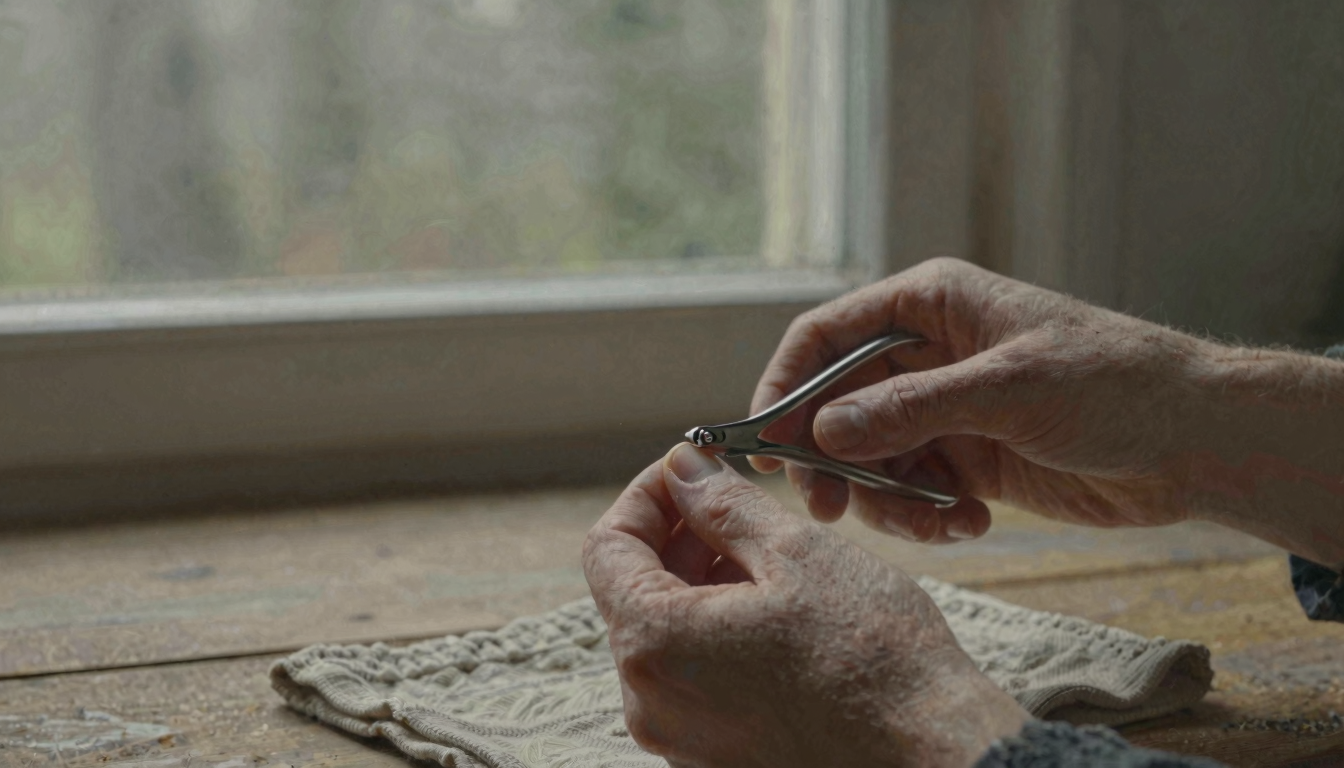
Summary
Dreaming about cutting your fingernails may symbolize deliberately reducing excess, preparing for a task, or bringing a personal boundary back to a useful measure. A careful trim can evoke chosen maintenance; cutting too far may evoke overcorrection. If someone else cuts them, consent and trust become central. These are conditional symbolic readings, not predictions of bad luck, financial loss, illness, or spiritual purification.
At a glance
Dreaming about cutting your fingernails may symbolize deliberately reducing excess, preparing for a task, or bringing a personal boundary back to a useful measure. A careful trim can evoke chosen maintenance; cutting too far may evoke overcorrection. If someone else cuts them, consent and trust become central. These are conditional symbolic readings, not predictions of bad luck, financial loss, illness, or spiritual purification.
Cutting sequence amount consent method stopping and aftermath distinct from general nail condition overview.
Recall cutter amount result ending; clarify one limit or stopping point.
The important feature is a measured action with a possible stopping point. You remove part of something that has grown while keeping the hand available for use. The dream may concern how much change is enough, and who gets to decide.
Reducing excess without removing the whole
Fingernails grow at the edge of the hands used for making, helping, and holding. Cutting them can evoke tending to a detail so that the larger action remains comfortable. Symbolically, improvement may come through reduction rather than adding more.
A small amount removed may suggest adjustment. A dramatic shortening may suggest a stronger wish to simplify or regain control. Neither is automatically good or bad; the result and feeling refine the reading.
The image can concern a commitment, standard, or habit that has extended beyond its useful length. What once supported participation may now require maintenance. The dream need not imply that the whole undertaking should be abandoned.
Notice what remains after the cut. A hand ready to act differs from one that feels exposed. A measured change keeps something useful, while overcorrection may leave a different problem at the edge.
Preparing rather than proving perfection
Cutting nails before an activity may symbolize readiness for a particular purpose. The task gives the action context. Preparing to work with cloth, meet someone, or handle a delicate object can each carry a different concern.
If the trim makes the action easier, the scene may evoke practical alignment. Appearance may matter less than function. You do not have to make every detail ideal to become ready for the next step.
If you keep checking the result, the image may emphasize a standard with no clear endpoint. Preparation can become difficult when every small correction suggests another. The symbolic question may concern permission to stop.
The dream does not establish that you are unprepared or inadequate. It may simply bring the conditions of readiness into focus: what serves the purpose, what is optional, and when the work can begin.
How much you cut matters
A comfortable length may symbolize proportion. You have changed an edge without losing its role. Relief afterward may emphasize that less can be sufficient.
Cutting too short may evoke fear that a correction removes protection along with excess. This can resemble a limit set so sharply that it no longer serves the relationship or task. The image is not proof that an actual decision was wrong.
Uneven nails may suggest uncertainty about applying the same measure to different parts. Some obligations may need more adjustment than others. Equal treatment is not always the same as a workable fit.
If the result is unclear, do not invent damage or satisfaction. An unfinished scene can leave the question open. You may be considering a change without yet knowing the appropriate measure.
A useful stopping point
Finishing the trim may symbolize recognizing enough. The scene can evoke moving from preparation to participation rather than staying at the stage of correction.
Repeatedly cutting the same nail may emphasize difficulty trusting a stopping point. The action may become less about function and more about removing uncertainty. That is a possible association, not a diagnosis.
Stopping midway may suggest interruption, hesitation, or deciding that not every part needs attention now. The reason matters. Being interrupted differs from choosing to pause because the hand already works comfortably.
Ask what happens next. Putting down the tool and using your hands can give the dream a different direction from continuing to inspect them. The transition may be the most informative part of the scene.
Someone else cutting your fingernails
A dream of someone cutting your fingernails may symbolize receiving assistance with a personal adjustment. Comfortable consent can emphasize trust and care. The action may feel supportive when your preference still guides it.
If the person chooses the length without asking, the scene may emphasize another person's standard being applied to you. It does not prove that someone in waking life is controlling. The symbolic question can concern participation in decisions about your own limits.
If you ask the person to stop and they do, the image may evoke responsive help. If they continue, it may evoke difficulty making a preference heard. The dream cannot establish the other person's real motives.
You can welcome help and still specify how much change you want. Assistance does not require surrendering the stopping point. That distinction can be central to a reading in which another pair of hands performs the task.
Tools pace and the surrounding space
A familiar tool may evoke an ordinary way of maintaining something. An awkward tool may evoke a method that does not fit the detail being changed. The reading can concern approach rather than the value of the goal.
A slow trim may emphasize patience and small decisions. Rushed cutting may emphasize pressure to finish before you have considered the result. Speed can matter even when the amount removed is similar.
A private setting may emphasize personal care. A public setting may emphasize being seen while you adjust or concern about others judging the process. Privacy is not secrecy, and visibility is not automatically shame.
These details are invitations for reflection, not a code. Do not add a blade, injury, witness, or location that the dream does not contain. The actual relationship between method, pace, and comfort is enough to examine.
Clippings and what follows the change
Gathering the clippings may symbolize dealing with what an adjustment leaves behind. An ending can require a small act of closure even when the main decision has already been made.
Leaving them scattered may suggest an incomplete aftermath or a detail you have not yet considered. It does not establish moral neglect or forecast loss. The feeling and setting determine whether the remnants matter.
If you simply move on, the dream may place more emphasis on readiness than cleanup. Not every removed part needs a separate symbolic meaning. The scene's center can remain the act of choosing a useful measure.
A change may be complete when its remaining obligations are clear. Symbolically, reducing excess is different from pretending that the change has no consequences. Care can include both the cut and what comes afterward.
Spiritual meaning of cutting nails
Spiritually, cutting fingernails may invite reflection on restraint and intentional maintenance. You can remove what exceeds a useful limit while preserving what supports action. The image may evoke a modest form of renewal.
An encouraging reading may concern choosing enough and becoming ready to participate. A cautionary reading may concern excessive correction or allowing someone else's measure to replace your own judgment.
The dream does not establish purification, a curse being removed, promised prosperity, or a divine command. Symbolic renewal remains a possible reflection rather than an unseen event presented as fact.
It is also distinct from waking beliefs about cutting nails at night. A dream action does not prove that a particular hour is unlucky. The useful questions here concern amount, agency, consent, and the point at which maintenance can end.
Where the symbolism may fit daily life
Work and preparation that keeps expanding
Repeated trimming may resemble revising a task after it already meets the requirement. Check the actual completion standard, then agree on one stopping point. Symbolically, preparation serves the work when it eventually lets the work proceed.
Relationships and a measured boundary
A careful cut may resemble reducing one commitment without ending a connection. Check what you can sustain, then state a specific limit. The image may concern proportion rather than an all-or-nothing choice.
Home and accepting help
Someone else trimming may resemble assistance with a personal arrangement. Check whether your preference is understood, then specify one useful contribution. Care can remain supportive when consent and the measure are clear.
Time and small forms of excess
Long nails shortened comfortably may resemble a routine that has grown beyond its purpose. Check which step still matters, then remove one unnecessary part. The symbolic question can be how to keep function while reducing the burden.
A modern example of deciding what is enough
Jon prepared a short introduction for a community workshop. He kept rewriting it until the opening took more time than the activity it introduced. He dreamed of cutting each fingernail neatly, then returning to the first one because he was unsure whether it was short enough.
He connected the return to a completed nail with preparation that had no agreed endpoint. His judgment was that the introduction needed to orient participants, while further polishing was displacing rehearsal of the actual workshop.
He limited the introduction to three points and asked a colleague to check whether the instructions were clear. He then practiced the activity once instead of rewriting again. The workshop began on time, and participants understood what to do. The ordinary result came from defining sufficient preparation rather than treating the dream as proof that his effort was inadequate.
Read the amount and the authority together
Recall who cuts, how much is removed, whether the result feels comfortable, and whether the action ends. Separate useful reduction from overcorrection, and welcome assistance from a measure chosen without your participation.
Cutting your fingernails in a dream may help you consider a change that can be small, deliberate, and sufficient. Choose one real limit or stopping point to clarify. The image can support that judgment without forecasting loss or turning maintenance into a demand for perfection.
Frequently asked questions
What does cutting your fingernails in a dream mean?
It may symbolize deliberate maintenance reducing excess or preparing for a task. Amount result and the stopping point shape the reading.
What does someone cutting your fingernails mean?
It may evoke welcome assistance or another person applying a standard to you. Consent and whether your preference guides the cut distinguish the readings.
What is the spiritual meaning of cutting nails?
It may invite reflection on restraint sufficient preparation and intentional renewal. No purification curse removal or guaranteed prosperity is established.
What if I cut them too short?
It may evoke overcorrection or removing protection with excess. It does not prove that a real decision was wrong or forecast harm.
What if I keep cutting the same nail?
It may emphasize difficulty accepting a stopping point. Consider when maintenance stops serving the task.
Does cutting nails in a dream bring bad luck?
No guaranteed luck outcome follows from the image. Dream cutting is distinct from waking nighttime taboos.
What if the trim leaves my hands comfortable?
It may evoke a useful measure that supports action. The symbolic emphasis can be readiness rather than perfection.