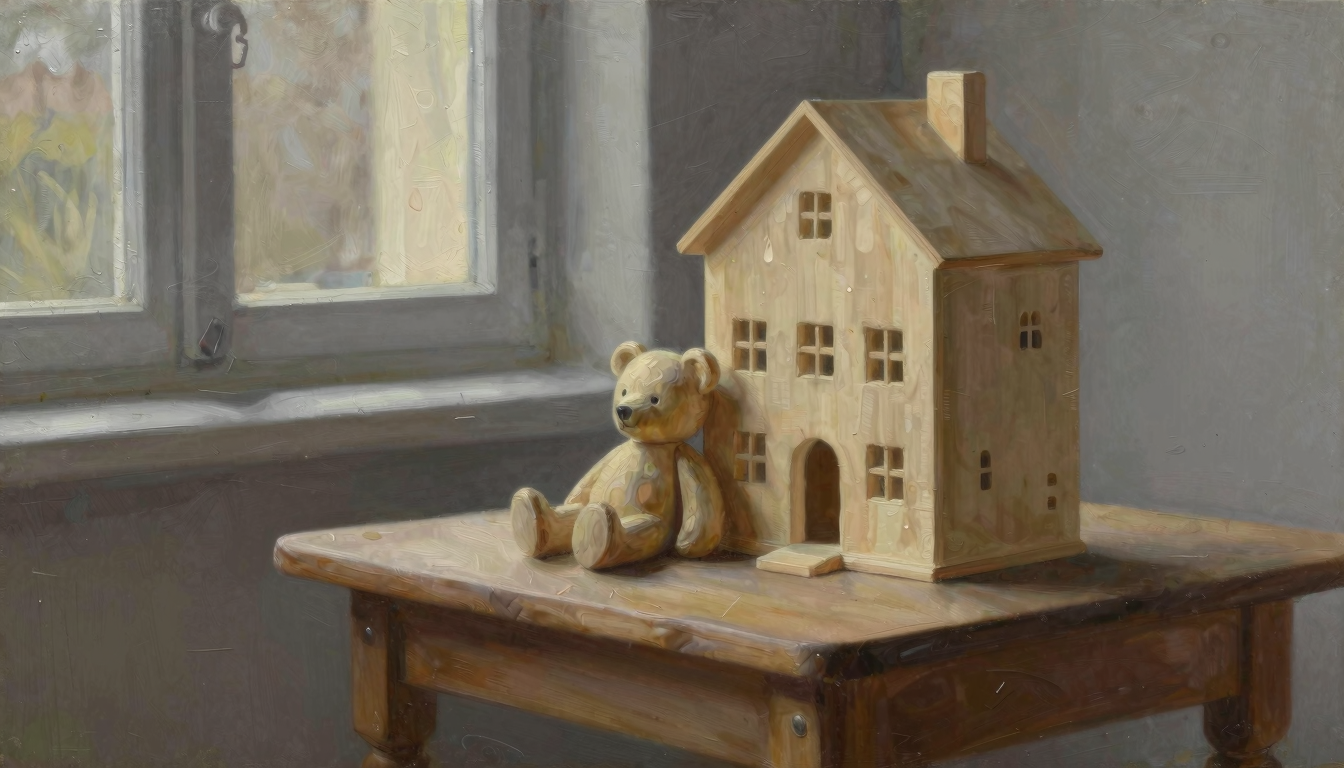
Summary
Dreaming about toys may symbolize play, comfort, remembered childhood roles, or a small space in which you try possibilities without making them permanent. The meaning changes with ownership, the kind of toy, and whether you watch, buy, share, or play with it. A toy coming to life may make that familiar space feel independent or unpredictable. None of these images establishes a future event or a diagnosis.
At a glance
Dreaming about toys may symbolize play, comfort, remembered childhood roles, or a small space in which you try possibilities without making them permanent. The meaning changes with ownership, the kind of toy, and whether you watch, buy, share, or play with it. A toy coming to life may make that familiar space feel independent or unpredictable. None of these images establishes a future event or a diagnosis.
Play ownership remembered roles buying and animated toys rather than animal or birth meaning.
Recall ownership action pause; choose one small activity.
A toy is often a representation that can be handled, arranged, and put away. Symbolically, it can raise a question about freedom to experiment: who sets the rules, what belongs to whom, and whether the activity feels inviting or demanding.
Seeing toys without playing
Seeing toys in a dream may evoke possibilities waiting to be tried, an invitation to rest from serious roles, or memories kept visible without being revisited. A shelf, a floor scattered with objects, and a carefully arranged collection can carry different feelings.
An orderly collection may suggest preserving something valued. Toys out of reach may suggest a distance between an available pleasure and permission to enjoy it. A cluttered room may emphasize too many possibilities at once rather than a lack of imagination.
Watching another person play may place you outside the activity. That can feel peaceful, excluded, or protective. The feeling helps distinguish observing freely from wanting to join but assuming you cannot.
The image need not imply immaturity. A small model can represent serious possibilities without carrying all their consequences. The useful distinction is between a space for exploration and an expectation that everything must already have a practical result.
Childhood toys and familiar roles
Dreaming about childhood toys may evoke continuity with an earlier interest, an old source of comfort, or a remembered way of joining other people. A recognizable toy can bring attention to a specific memory rather than childhood as a single universal symbol.
Finding a toy where it used to be may suggest something familiar still has a place. Finding it in an unfamiliar setting may suggest that an old role is being carried into a new situation. The dream does not prove that a memory is accurate or reveal a hidden event.
Enjoying the toy as an adult may evoke permission to revisit a pleasure. Feeling required to use it in the old way may evoke a role that no longer fits. What was once comforting can remain meaningful without becoming a rule for the present.
Notice whether the dream allows you to choose. Choosing what to keep, share, or set aside can symbolize continuity with room for change. Throwing everything away or keeping everything forever are not the only possible responses.
Stuffed toys and comfort with boundaries
Stuffed toys may symbolize softness, familiarity, companionship, or a portable source of comfort. Holding one can emphasize closeness; placing it nearby can emphasize comfort that remains available without needing constant attention.
A worn stuffed animal may evoke a long relationship with an object or memory. Damage can add a question about care, but wear alone does not mean that comfort has failed. An unfamiliar stuffed toy may evoke a new form of reassurance whose place is not yet settled.
If someone offers you one, consider whether the gesture is welcome. If someone takes it, the scene may emphasize ownership or permission. Neither action establishes another person's waking motives.
A stuffed toy can carry an encouraging reading of gentleness and a cautionary reading about assuming comfort must come from only one source. Its symbolic value lies in how it is used and felt, rather than in a promise that loneliness will end.
Baby toys and children at play
Baby toys in a dream may evoke simple beginnings, a need for gentle attention, or an activity at an early stage. Their scale can make patience and manageable stimulation more prominent than achievement.
Dreaming about kids' toys may emphasize learning through trying, negotiating shared rules, or allowing something to develop through repetition. The presence of children changes the scene, but toys alone do not predict pregnancy or establish facts about a child's wellbeing.
A toy intended for a baby may feel suitable, excessive, or outgrown. Those differences may reflect a question about matching an activity to its present stage. A new beginning does not have to carry the expectations of a finished undertaking.
If you prepare toys for someone else, the scene may emphasize care and choosing what is appropriate. It can also invite reflection on whether the recipient has room to choose. Support remains different from deciding every part of another person's experience.
Buying toys and choosing what to invite
Buying toys in a dream may symbolize investing attention in play, selecting a new possibility, or trying to provide enjoyment for someone. The choice matters: buying for yourself, choosing a gift, and buying under pressure carry different emphases.
A satisfying purchase may evoke permission to enjoy an interest. Being unable to choose may evoke uncertainty about whose pleasure counts. Buying far more than needed may emphasize substituting acquisition for the experience of actually using something.
A gift can symbolize generosity without guaranteeing that the recipient wants it. If the dream shows disappointment, the question may concern fit rather than the giver's worth. If it shows delight, the scene may evoke the pleasure of a well-matched gesture without predicting a waking response.
Keep the symbolic decision separate from spending. The dream cannot establish that a real purchase is necessary or affordable. Its reflective value may be in identifying what kind of play or attention you want to make room for.
Toys coming to life
Toys coming to life may symbolize a familiar representation gaining an unexpected voice or movement. Something that seemed easy to arrange now has its own behavior. This can feel lively, surprising, intrusive, or frightening.
A friendly animated toy may evoke imagination becoming more active. A threatening one may evoke uncertainty about control, especially when an activity supposed to be manageable becomes demanding. Neither scene proves a supernatural presence or predicts harm.
Notice whether you can pause, speak, leave, or change the rules. Being trapped with the toy can make loss of choice more prominent. Playing alongside it can make participation without total control more prominent.
The distinctive contrast is between handling a representation and responding to something that seems independent. A waking project can begin as a small experiment and grow into obligations. The dream may help you examine that change without declaring that growth itself is bad.
Named phrases and a toy actually remembered
A phrase such as Dream Toys 2025, Dream Toys List, Dream Toys List 2025, or Dream Toys Calendar can concern a dated list or named item rather than an experience during sleep. A year, list, or calendar does not supply a symbolic meaning for toys. If you remember a toy from a dream, its role in the scene remains the useful starting point.
Dream Toys Honey Bear and Dream Toys Car also need that distinction. If the dream actually includes a toy bear, softness and companionship may matter; if it includes a toy car, a manageable model of movement or direction may matter. The phrases alone do not establish a particular object's features or a fixed interpretation.
Dream Toys The Girl Next Door, Dream Toys Glam Couples, Dream Toys Goddess Collection Apollo, and Dream Toys Glamour Glass cannot be interpreted from their names alone. A name is insufficient to establish what an item is or what happened in a dream. Consider the actual object's function, your action, and the feeling rather than assigning a message to unfamiliar wording.
Where room for play may matter
Work and a small experiment
A toy model may resemble trying a proposal before expanding it. Check whether the trial has a clear scope, then choose one small test. Symbolically, a manageable version can preserve curiosity without turning every experiment into a lasting obligation.
Relationships and shared rules
Sharing toys may resemble arranging an activity with another person. Check who chooses and whether both can decline, then agree on one simple arrangement. The image cannot prove that a partner or friend intends to control the relationship.
Home and objects with a history
A childhood toy may resemble a possession kept for its personal meaning. Check what it represents now, then choose a place or use that fits. Preserving one valued object need not require keeping every earlier role unchanged.
Creativity and permission to try
Unused toys may resemble ideas waiting for an occasion to be explored. Check whether the obstacle is time or an expectation of immediate perfection, then make one small piece. Play can have value before it becomes something to display or sell.
A modern example of allowing a small trial
Rina planned a community drawing session. She kept adding complicated exercises because she wanted every participant to leave with a finished picture. She dreamed of childhood building toys coming to life and rearranging themselves while she tried to keep them in one elaborate pattern.
She connected the restless toys with an activity that needed room for participants' choices. Her judgment was that a shared starting point would help more than a fixed result everyone had to reproduce.
She replaced several exercises with a short warm-up and let people choose one ordinary object to draw. Participants began promptly, and each finished a sketch they could discuss. The ordinary result came from simplifying the arrangement and allowing choice, rather than treating the dream as a command or assuming play organizes itself.
Keep the object action and permission together
Recall whose toy it was, what you did, and whether the activity could pause. Distinguish comfort from obligation, remembering from repeating, buying from enjoying, and a chosen experiment from something that has grown beyond its original limits.
Toys in a dream may help you consider where curiosity or gentleness could have a place. Choose one small activity or adjustment that fits the real situation. The image can support reflection without diagnosing immaturity or promising a return to an earlier life.
Frequently asked questions
What does seeing toys in a dream mean?
It may evoke play or possibilities waiting to be tried. Ownership and whether you join the activity help distinguish invitation from exclusion.
What do stuffed toys symbolize in dreams?
They may evoke comfort familiarity or companionship. Holding sharing or losing one changes the emphasis without establishing another person's motives.
What do baby toys and kids toys mean in dreams?
Baby toys may emphasize gentle beginnings; kids toys may emphasize learning and shared rules. Neither image predicts pregnancy or diagnoses a child.
What does dreaming about buying toys mean?
It may symbolize choosing to invest attention in play or provide enjoyment. Consider recipient fit and choice; it does not authorize a real purchase.
What does a dream about toys coming to life mean?
It may evoke a manageable representation becoming independent. Friendly or frightening behavior and your ability to pause shape the reading; it is not proof of a supernatural presence.
What does dreaming about childhood toys mean?
It may evoke an earlier interest comfort or role. Consider what still fits now without treating the dream as an accurate record of hidden events.
Do Dream Toys lists calendar and 2025 names explain a dream?
No. A dated list calendar or name does not establish what happened during sleep. Begin with the actual remembered object and action.
How should named toy phrases be interpreted?
Honey Bear Car The Girl Next Door Glam Couples Goddess Collection Apollo and Glamour Glass names alone are insufficient. Consider an actual object's role without assuming product features or a fixed message.