Summary
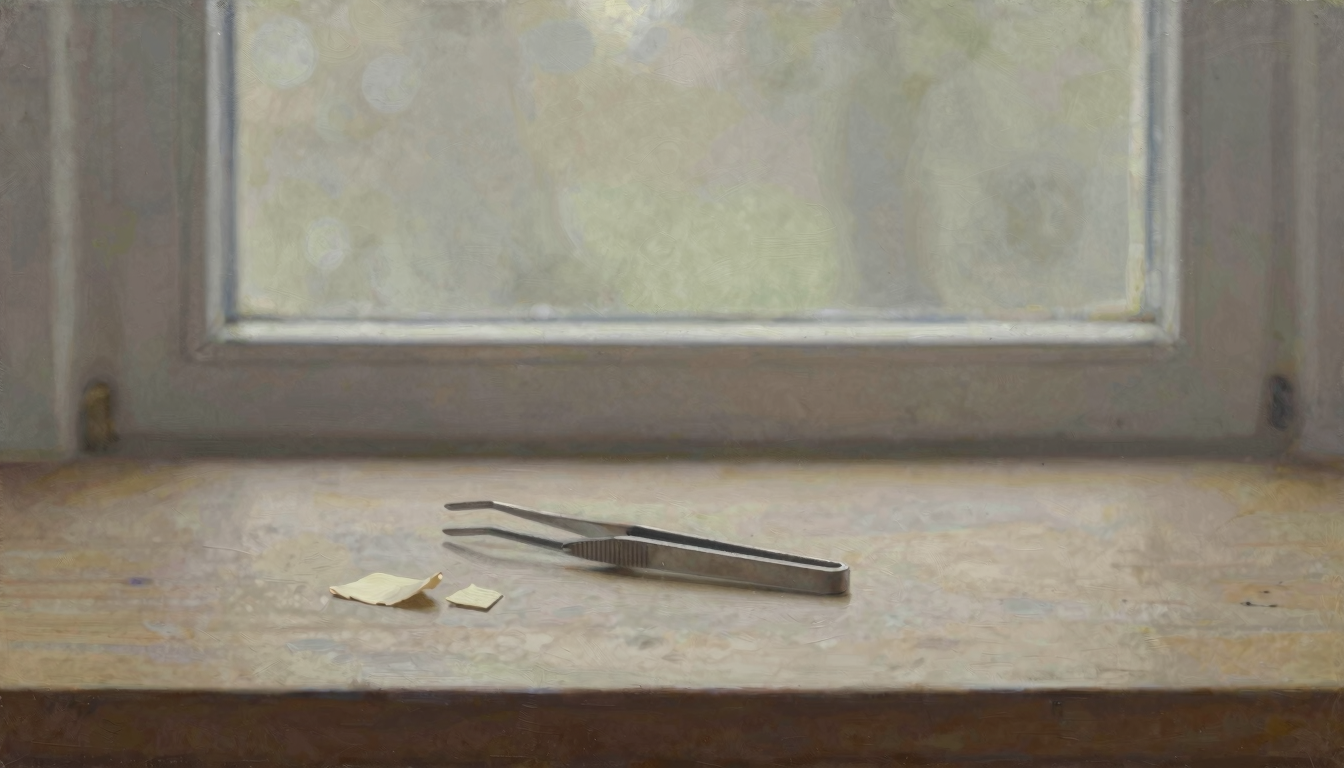
Dreaming about tweezers may symbolize precise attention, removing a small irritation, or trying to adjust something without disturbing the whole. The meaning depends on what you grasp, whether it comes away easily, and whether the action feels helpful or excessive. Holding a tiny object differs from plucking something unwanted. The dream does not diagnose a problem, reveal a hidden enemy, or prove that every detail needs correction.
At a glance
Dreaming about tweezers may symbolize precise attention, removing a small irritation, or trying to adjust something without disturbing the whole. The meaning depends on what you grasp, whether it comes away easily, and whether the action feels helpful or excessive. Holding a tiny object differs from plucking something unwanted. The dream does not diagnose a problem, reveal a hidden enemy, or prove that every detail needs correction.
Precision grasp removal and placement distinct from disappearing eyebrows.
Recall target action; choose proportionate adjustment and endpoint.
Tweezers bring a small target into focus. Symbolically, they can emphasize the relationship between the size of a problem and the amount of attention given to it. A careful action may be useful; repeated searching for another flaw may change its purpose.
Precision rather than force
Tweezers may evoke a wish to handle something delicately. Their narrow tips suggest selecting one small part instead of grasping everything at once. That can feel calm when the target is clear and frustrating when it keeps slipping away.
An encouraging reading may concern care that preserves the surrounding material. A cautionary reading may concern attention becoming so narrow that you lose sight of the larger purpose. Neither interpretation establishes how you should judge a waking situation.
A small tool does not necessarily mean a small concern. The dream may make one detail feel important because it affects comfort, appearance, or the completion of a task. The question is whether the action serves that purpose.
The useful distinction is between a specific adjustment and a search for perfection. One has a target and an endpoint; the other may keep producing new reasons to continue. Your remembered action helps identify which possibility the scene emphasizes.
Removing a small irritation
Using tweezers to remove something unwanted may evoke addressing a localized annoyance. If the object comes away and you stop, the scene may emphasize relief through a limited action. If you continue after it is gone, the emphasis may shift toward difficulty accepting completion.
A splinter in the dream may symbolize a small disturbance that remains noticeable despite its size. Removing it may evoke resolving that disturbance. The image cannot establish an injury or provide instructions for treating a real one.
If you cannot see what you are trying to remove, the dream may emphasize uncertainty about the target. If someone points it out, it may emphasize assistance within the scene. Neither detail proves that another person knows a hidden truth about you.
Keep the imagined relief separate from a guaranteed waking result. A dream can make removal feel satisfying without showing whether a real difficulty has the same cause or needs the same kind of response.
Plucking hair and changing appearance
Plucking hair with tweezers may evoke deliberate adjustment to appearance or a wish to control a visible detail. Feeling pleased may emphasize a chosen preference; discomfort may emphasize the cost of continuing the adjustment.
If the hair is on your own face, the scene may concern how you wish to present yourself. If you pluck someone else's hair, permission and their response matter. The dream cannot establish what another person thinks of your appearance.
An eyebrow being adjusted differs from an eyebrow disappearing without your action. Tweezers place the emphasis on selecting and removing, while disappearance emphasizes absence. Keeping those actions distinct prevents the tool from becoming a fixed message about identity.
Repeatedly plucking until the result no longer feels right may evoke losing the stopping point. That does not prove that you are vain or controlling. It may invite reflection on whether a real adjustment still serves your own wishes.
Holding something small and valuable
Tweezers can also hold a tiny object rather than remove it. In a dream, lifting a bead, thread, or small component may evoke care for something difficult to handle directly. The purpose can be preserving or placing, not eliminating.
A steady grip may emphasize confidence within a delicate task. Dropping the object may emphasize concern about losing what you are trying to protect. Neither predicts success or loss in waking life.
If you place the object where it belongs, the scene may emphasize a small contribution to a larger whole. If you keep holding it without deciding where to put it, it may emphasize attention without a next step.
The object matters as much as the tool. Holding something treasured should not be interpreted as removing an irritation merely because tweezers appear in both scenes. Follow the action before assigning a meaning.
Slipping bent or missing tweezers
Tweezers that cannot grip may evoke a mismatch between the tool and the task. The scene may emphasize frustration at trying the same approach repeatedly. It does not establish that you lack ability.
Bent tips may evoke difficulty making an intended adjustment. Missing tweezers may evoke looking for a precise method when the target is already clear. Finding another tool may emphasize flexibility, depending on what happens next.
If you abandon the task, notice whether that feels relieving or disappointing. Stopping can mean recognizing a limit, losing interest, or choosing another priority. The image alone cannot decide which interpretation fits.
A failure to grasp in the dream is not proof that a real problem cannot be solved. The symbolic question may be whether the method suits the purpose, rather than whether more force or more effort will necessarily help.
Someone else using the tool
Watching someone use tweezers may evoke trust in their care or discomfort about another person's attention to your details. Your response changes the meaning. Calm agreement differs from wanting them to stop.
If they ask permission, the scene may emphasize participation in an adjustment. If they continue despite your objection, it may emphasize an unwanted intervention within the dream. It cannot establish that a real person intends to overstep.
Offering tweezers to someone may evoke sharing a useful method. Taking them away may evoke a wish to change who controls the action. Neither gesture should automatically become a judgment about the relationship outside the dream.
Consider what is being adjusted and whose preference matters. A precise action can still need agreement. The small size of the tool does not make every intervention welcome.
Careful attention as a spiritual reflection
For personal spiritual reflection, tweezers may invite consideration of discernment: choosing what to keep, what to remove, and when to stop. That remains a conditional reflection rather than a fixed religious rule or a promise of purification.
An orderly scene may evoke patient care. An anxious search may evoke the burden of expecting every small imperfection to carry a message. Neither scene proves spiritual progress or failure.
A helpful reading leaves room for the whole object to remain imperfect. Symbolically, attention can be proportionate rather than endless. What matters is whether the action preserves what you value while addressing a clear need.
The dream cannot identify secret contamination, curses, or harmful people. Its small target is an image to consider, not evidence that something unseen must be removed from your life.
Where a small adjustment may matter
Work and one detail blocking completion
Tweezers may resemble correcting a specific detail in a nearly finished task. Check whether it affects the result, then fix that detail and stop. Symbolically, precision can serve completion without requiring every part to be redone.
Relationships and a minor irritation
Removing a small object may resemble addressing one recurring annoyance. Check the actual behavior rather than assigning motives, then make one clear request. The dream cannot prove that the other person is the cause of every discomfort.
Home and choosing a suitable method
Slipping tweezers may resemble using an unsuitable approach to organize a delicate household task. Check the purpose and available tools, then change one method. More effort is useful only when the approach fits the task.
Creativity and preserving the larger piece
Placing a tiny object may resemble refining a small element of a creative piece. Check whether the adjustment improves the whole, then complete one version. Symbolically, a detail can matter without becoming the only thing you see.
A modern example of finding the stopping point
Sofia prepared a small paper collage for a community display. She kept lifting and replacing tiny pieces until the main shape began to lose its balance. She dreamed of holding one paper fragment with tweezers while the finished picture waited beside her.
She connected the scene with keeping attention on a small adjustment after the larger piece already served its purpose. Her judgment was that she needed a stopping point rather than another search for flaws.
She compared the collage from a few steps away, placed the remaining fragment, and asked a volunteer to check that its mount was secure. The piece was ready when the display opened. The ordinary result came from reviewing the whole, finishing, and checking the mount; the dream did not prove that every revision was unnecessary or guarantee praise.
Read the target alongside the purpose
Recall what the tweezers grasped and whether you removed, held, or placed it. Distinguish relief from endless correction, care from unwanted intervention, and a suitable method from repeated effort with an unsuitable one.
Choose one real detail whose purpose and endpoint you can state. A tweezers dream may support proportionate attention without requiring you to remove every irritation or turn every imperfection into a warning.
Frequently asked questions
What does dreaming about tweezers mean?
It may evoke precise attention removing a small irritation or making a limited adjustment. The target and your action shape the reading.
What does removing something with tweezers mean?
It may evoke addressing a localized annoyance. Relief differs from continuing to search after the target is gone; the dream cannot diagnose an injury.
What does plucking hair mean?
It may evoke a chosen change in appearance or concern about its cost. It cannot establish how others see you or dictate what your body should look like.
What if the tweezers cannot grip?
It may evoke a mismatch between method and task. It does not prove incapacity; consider whether a different ordinary approach fits the purpose.
What if I hold a small object with tweezers?
It may evoke care preserving or placing something delicate. Holding differs from removing and should not automatically mean getting rid of a problem.
Does this dream reveal a hidden enemy?
No. A small target in a dream is not evidence of secret harm contamination or another person’s motives.