Summary
Dreaming about a maple tree may symbolize continuity through change, a familiar place entering a new season, or something established that still needs room to grow. New leaves, autumn color, bare branches, and the tree's age can emphasize different phases. A maple in its twentieth spring may make accumulated years especially noticeable, but the number does not establish a prophecy, deadline, or universal spiritual code.
At a glance
Dreaming about a maple tree may symbolize continuity through change, a familiar place entering a new season, or something established that still needs room to grow. New leaves, autumn color, bare branches, and the tree's age can emphasize different phases. A maple in its twentieth spring may make accumulated years especially noticeable, but the number does not establish a prophecy, deadline, or universal spiritual code.
Maple seasonal continuity and accumulated springs distinct from unusual fruit and falling trees.
Recall season age position response; check present conditions of one returning activity.
The useful distinction is between a repeating season and an identical experience. Something can return in a familiar form while your relationship with it has changed.
Continuity that allows a different season
A maple may offer an image of remaining recognizable while its appearance changes. Symbolically, the trunk can represent an enduring connection while the leaves make a current phase more visible.
The encouraging side may concern allowing renewal within something you already value. The cautionary side may concern expecting an old arrangement to serve every stage without adjustment. Neither interpretation proves that a waking situation is healthy or finished.
A tree seen from a distance may emphasize recognition. Approaching it may emphasize renewed involvement. Staying beneath it may emphasize the kind of shelter or space it offers in the scene.
Notice what remains and what changes. A familiar tree can evoke belonging without requiring you to preserve every habit associated with it. Its continuity need not mean immobility.
New leaves and a beginning within an existing life
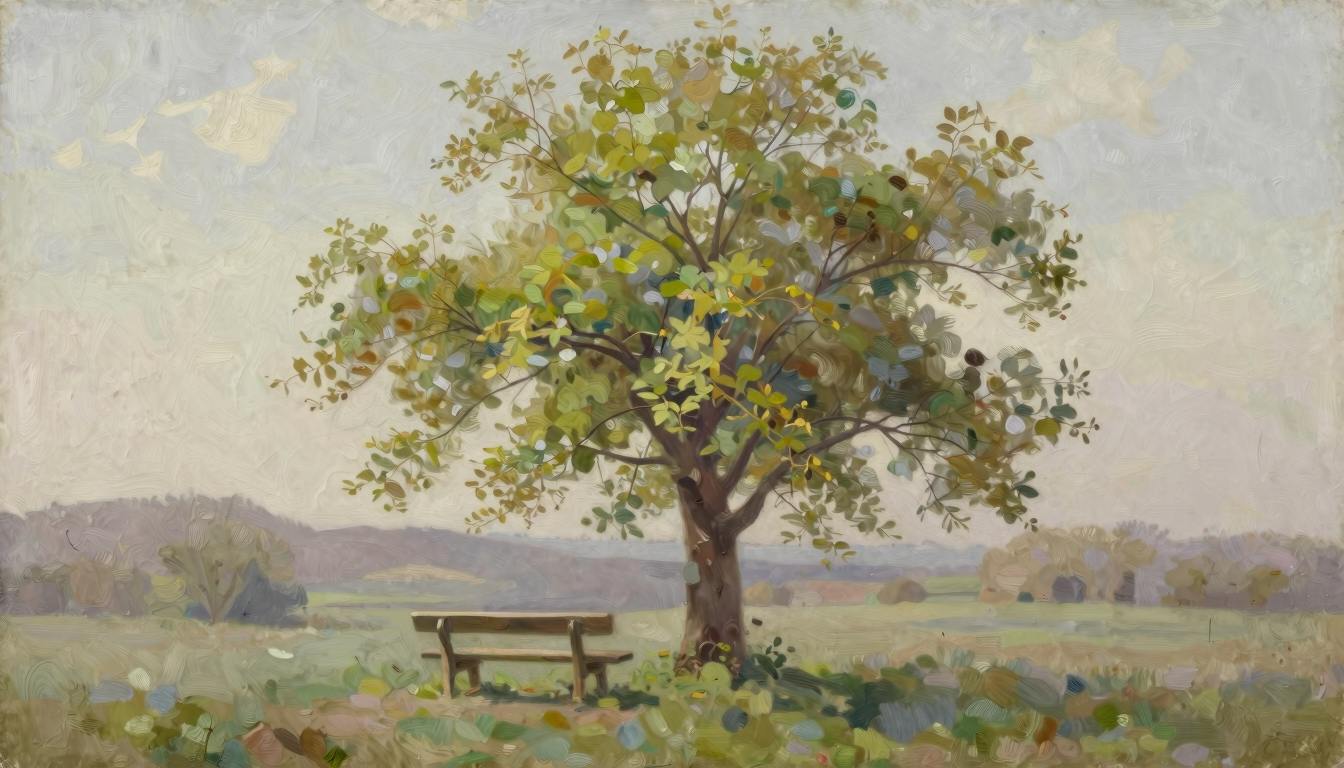
Spring leaves may evoke a fresh expression of something already rooted. This differs from beginning with no history: the scene may hold both an established connection and a current possibility.
If the leaves draw your attention, the dream may emphasize noticing a small change before it becomes dramatic. If you ignore them while staring at an old mark on the trunk, it may emphasize how the past shapes what you can see now.
Neither detail predicts a new job, romance, or recovery. A symbolic beginning is a way of considering a phase rather than evidence that an event will occur.
A useful comparison might involve a familiar practice becoming interesting again. The dream can invite curiosity about what is different this time, without telling you that the earlier years were wasted or that a new version must succeed.
Autumn color and a visible transition
A maple with autumn color may evoke a phase becoming unmistakable. Red, gold, or orange leaves can make change visible rather than hidden, especially when the dreamer watches them closely.
An appealing canopy may emphasize appreciating what a phase has produced. A restless response may emphasize wanting to move before understanding what is ending. Neither feeling establishes a favorable or unfavorable verdict.
Falling leaves may evoke allowing part of an arrangement to finish. They do not predict death, separation, or financial loss. The dream's ordinary sequence matters: watching, collecting, walking through, and trying to stop the fall are different actions.
Trying to hold every leaf in place may emphasize wanting continuity without change. Letting leaves move may emphasize allowing a familiar connection to take another form. These comparisons remain possibilities, not commands to abandon something important.
Bare branches and a less visible phase
A bare maple may evoke a period when an enduring connection offers fewer visible signs of activity. The scene may emphasize patience, exposure, or a clearer view of the tree's structure.
Bare branches alone do not establish failure or hopelessness. A quiet tree in an open landscape differs from a tree that the dream explicitly presents as broken. Do not turn a seasonal appearance into a prediction about a person.
If you can see paths or buildings through the branches, the scene may emphasize what becomes noticeable when familiar coverage recedes. Less visible activity can make other details easier to assess.
If the tree still provides a meeting place, it may emphasize the continuing role of a familiar point of reference. Its value in the dream may concern orientation rather than immediate growth or display.
A twentieth spring and accumulated years
A dream of a maple tree in its twentieth spring may emphasize renewal viewed alongside a long history. The phrase combines a returning season with a specific count, making both continuity and elapsed time noticeable.
Twenty could relate to an anniversary, a remembered age, or a count explicitly present in the dream. It does not have a single established meaning here. The tree's twentieth spring need not correspond to twenty years of your own life.
If the age feels important, consider what the scene compares: an old tree with new leaves, a familiar place with different people, or a repeated visit with a changed response. The number may sharpen the comparison without supplying its conclusion.
If the phrase is something you encountered outside a dream, distinguish that memory from details you actually experienced while sleeping. A remembered title or sentence can explain why a phrase feels familiar without proving that it contains a message.
There is no automatic deadline to act in the twentieth year and no guaranteed reward for waiting that long. Symbolically, the scene may ask how something established can make room for the current season.
One maple and several maple trees
One maple may make a particular connection or place stand out. Several maple trees may emphasize a shared setting, repeated pattern, or the relationship between individual growth and a larger arrangement.
Walking between them may emphasize available routes. Returning to one specific tree may emphasize recognition or attachment. Neither action tells you that a waking choice is destined.
If all the trees look alike, notice how you identify the one that matters. A mark, location, or remembered meeting can make personal history more important than the species alone.
The dream meaning of maple trees can therefore differ from the meaning of a single isolated tree. A group may concern how you move among familiar connections, while one tree may concern how you relate to a particular enduring presence.
Distance shelter and the space around the tree
The space around a maple can alter its symbolic role. An open clearing may emphasize freedom to approach; a crowded setting may emphasize how an established presence fits among newer demands.
Resting beneath it may evoke a pause within continuity. Being unable to reach it may evoke distance from a familiar reference point. The dream cannot prove that someone is excluding you or that a place will remain unavailable.
A tree near a childhood home may evoke the relationship between remembered belonging and present needs. The scene does not require returning to the past. It may make the contrast between then and now easier to consider.
If you are tending the space, responsibility may become prominent. If someone else tends it, participation and agreement may matter. A familiar source of shelter need not belong to one person alone.
Four ordinary situations to consider
Work and a recurring responsibility
A task may return each year while the people or resources around it change. Spring leaves may resemble a familiar responsibility entering a different phase. Check which conditions are new, then revise one practical assumption. The dream cannot determine whether the whole project will succeed.
Relationships and a familiar meeting place
An old friendship may retain its significance while visits need a different rhythm. A maple may resemble continuity that permits adjustment. Check current availability rather than relying on the old schedule, then suggest one workable meeting. Symbolically, changing the form of contact need not erase the connection.
Home and changing use of space
A household arrangement may have served one stage well while current routines need more room. The space around a tree may resemble how an enduring feature fits with newer demands. Check how people use the space now, then make one agreed adjustment. The dream cannot reveal hidden family wishes.
Creativity and returning to an old practice
A familiar creative habit may become interesting after a quiet period. New leaves may resemble a fresh expression within an established practice. Check what you want to explore now, then make one small piece. Returning does not require reproducing the earlier version exactly.
A modern example of a changed tradition
Nina had organized an annual sketching afternoon with two friends for many years. She kept proposing the same long route, although one friend's schedule had become shorter. She dreamed of a maple described as being in its twentieth spring, with new leaves above a bench where they used to meet.
She connected the scene with a tradition that could remain recognizable while its current form changed. Her judgment was that keeping the shared activity mattered more than repeating the entire route.
She asked both friends how much time they had and proposed meeting at the bench for a shorter session. They each finished one sketch and agreed on a later date to try another location. The ordinary result came from checking availability and adjusting the plan; the dream did not predict their response or assign a fixed meaning to twenty.
Compare the returning season with the current need
Recall the tree's condition, your distance from it, and whether a particular age was part of the scene. Distinguish renewal from starting without history, seasonal quiet from failure, and continuity from keeping every detail unchanged.
Choose one familiar connection whose present conditions you can check. A maple dream may offer an image of enduring identity through changing phases without promising success or turning an anniversary into a deadline.
Frequently asked questions
What does dreaming about a maple tree mean?
It may evoke continuity through change or an established connection entering a different season. Condition action and response matter more than a fixed prediction.
What does a maple tree in spring mean?
New leaves may evoke fresh expression within an existing connection. They do not guarantee a new event or outcome.
What do autumn leaves and bare branches mean?
Autumn color may emphasize visible transition; bare branches may emphasize a quieter phase or clearer structure. Neither predicts loss or failure.
What does a dream of a maple tree in its twentieth spring mean?
It may emphasize renewal alongside accumulated years. Twenty has no fixed meaning here and establishes no deadline prophecy or correspondence to your age.
What is the dream meaning of several maple trees?
Several trees may emphasize a shared setting or repeated pattern. One specific tree may emphasize a particular familiar connection.
Does a maple tree dream mean I should return to the past?
No. A familiar tree may offer a comparison between earlier belonging and current needs. Check present conditions before deciding what to preserve or change.