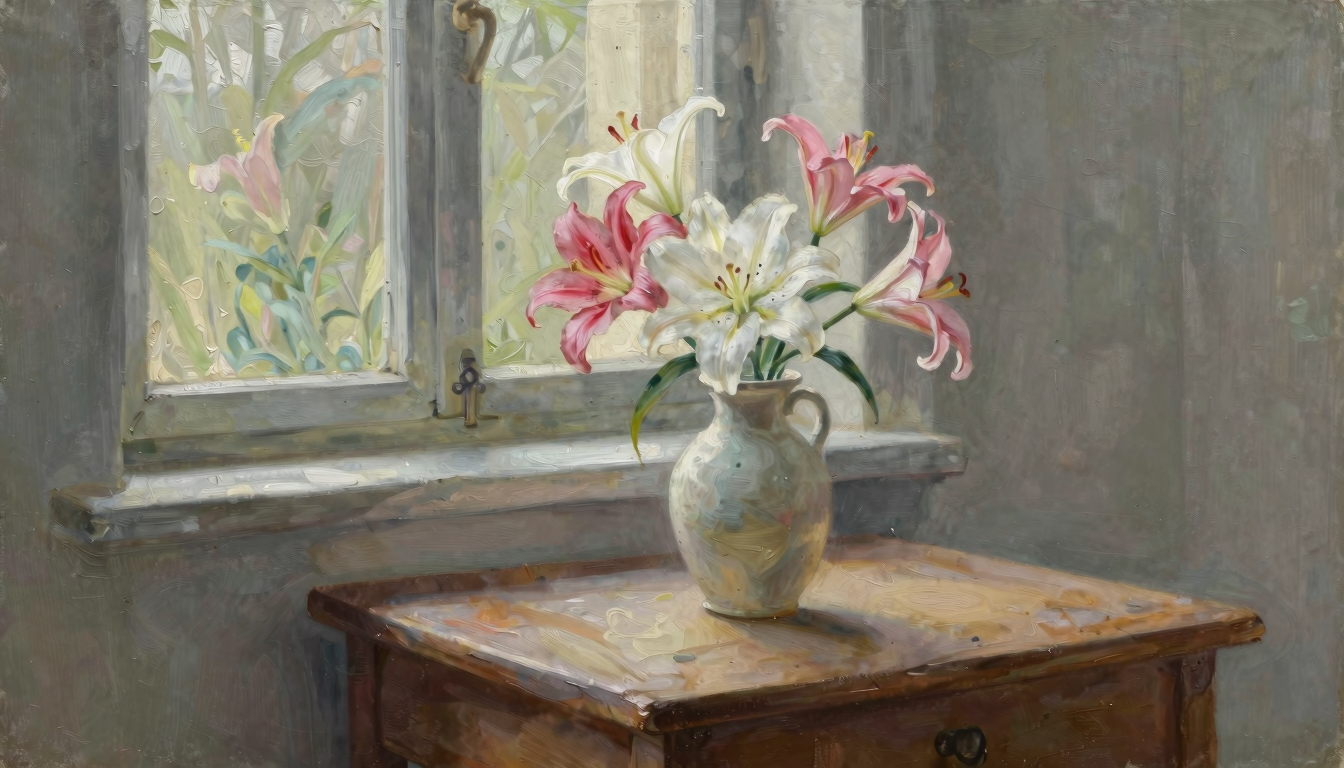
What this article is really about
Dreaming about lilies may symbolize deliberate attention, a wish to mark an occasion, or the relationship between an elegant presentation and the setting around it. White lilies, water lilies, calla lilies, and a plant called a peace lily are different subjects. Their names and colors do not predict purity, grief, peace, danger, or success. The useful question is what the flower makes you notice and whether its form fits the activity taking place.
Direct answer
Dreaming about lilies may symbolize deliberate attention, a wish to mark an occasion, or the relationship between an elegant presentation and the setting around it. White lilies, water lilies, calla lilies, and a plant called a peace lily are different subjects. Their names and colors do not predict purity, grief, peace, danger, or success. The useful question is what the flower makes you notice and whether its form fits the activity taking place.
Lily form formal attention and setting distinct from nearest baby loss or teeth topics.
Recall actual subject color action setting; clarify one attention purpose.
A striking flower can become the center of a scene without deciding its emotional meaning. Read the location, action, and response alongside the appearance.
An object of deliberate attention
Lilies may evoke something arranged or noticed with particular care. A single flower can stand apart from its surroundings; an arrangement can make an occasion feel marked.
The encouraging reading may concern giving attention to something that matters. The cautionary reading may concern allowing a formal presentation to overshadow the people or activity it is meant to support. Neither establishes what a real occasion requires.
If you place the flowers, intention may dominate. If you receive them, your response may be more important. Seeing them already arranged may emphasize an atmosphere you encounter rather than create.
The useful distinction is between an object drawing attention and attention reaching its purpose. A beautiful display can matter while a conversation or shared activity still needs room.
White lilies and the remembered occasion
White lilies may evoke simplicity, formality, or an occasion you personally associate with them. The dream's actual setting matters more than treating white as a universal verdict.
They do not predict death, marriage, purity, or divine approval. A flower beside a dining table differs from one in an explicitly remembered ceremony. Do not add a ceremony that was not present.
If the white color feels quiet, the scene may emphasize restraint. If it feels striking against other objects, contrast may matter. Neither response determines another person's intention.
Notice whether the flowers help identify the occasion or become its entire focus. Symbolically, a remembered association can be meaningful without requiring the present scene to repeat the event you recall.
Pink purple and blue lilies
Pink lilies may evoke a gentler or more personal expression if those associations fit. They do not establish romance or reveal affection from another person.
Purple lilies may emphasize a distinctive presentation, a preference, or an unusual detail. Purple does not prove authority, spiritual advancement, or a special message.
Blue lilies may evoke unfamiliarity, an imagined form, or a deliberate choice of color. They do not predict a miracle or establish that an unlikely wish must come true.
If you choose between these colors, preference may become central. If several appear together, the scene may emphasize variety rather than one correct meaning. A color can add a detail without settling the whole interpretation.
Orange yellow and red lilies
Orange lilies may evoke warmth or a conspicuous expression. Yellow lilies may evoke brightness or a personally remembered setting. Red lilies may emphasize intensity or attention.
None of these colors supplies a fixed favorable or unfavorable verdict. Yellow does not prove jealousy, red does not predict danger, and orange does not guarantee vitality or success.
If a vivid flower feels too prominent, the scene may emphasize scale or fit. If it feels appropriate, it may emphasize an expression that belongs in the setting. Neither response confirms what others would prefer.
The useful comparison is what the color changes in the activity. A striking presentation can support an intention or distract from it, depending on what happens around the flower.
Calla lilies and a distinct form
A calla lily may emphasize a particular outline or a formal arrangement if that is what you recognize. Its role should follow the remembered object rather than every association attached to the word lily.
If you arrange calla lilies carefully, the scene may emphasize presentation or a chosen order. If you see them standing apart, separation or focus may matter more than abundance.
The name does not establish a wedding, funeral, or religious verdict. A personally significant ceremony can matter when it is actually part of the scene, but the flower alone cannot supply it.
The useful question is whether the distinctive form serves a purpose. A clear outline may make one detail easier to notice without making that detail the most important thing in the room.
Water lilies and the space around them
Water lilies may emphasize a flower in relation to a surface and surrounding space. Open water, leaves, distance, and movement can make the setting especially important.
If you watch from the bank, observation may dominate. If the scene lets you approach, participation may become more immediate. Neither predicts access to a real place or confirms an invitation.
Still water may make reflection noticeable; moving water may emphasize changing position. These are conditional comparisons, not proof of an emotional or spiritual state.
A water lily can be meaningful without needing to be collected. Symbolically, attention can remain respectful of a setting. Its presence does not guarantee renewal, purification, or healing.
A lily pad without a flower
A lily pad is a different detail from a bloom. If the pad is central, the scene may emphasize a surface, a place where something rests, or the relation between a visible support and what appears above it.
A pad without a flower does not predict failure or an opportunity that will never arrive. It may simply be the object you noticed. Do not invent a missing bloom as the dream's hidden message.
If something rests on the pad, its relation to that surface may matter. If you only observe it, position or spacing may dominate. The dream supplies no botanical or practical instructions.
The useful distinction is between support and display. What enables an image to appear can carry meaning without looking like the image itself.
A peace lily and the role of a name
A plant called a peace lily may evoke a familiar indoor setting, continuing care, or a name with a strong association. The word peace does not guarantee reconciliation or prove that a relationship is harmonious.
If you tend the plant, responsibility may become prominent. If someone gives it to you, receiving and the terms of the offer may matter. If it sits unnoticed in the room, familiarity may be more important than the name.
The dream establishes no therapeutic, protective, or cleansing effect. A meaningful plant can be part of a personal scene without acting as a treatment or supernatural instrument.
Read what the plant actually does in the dream. The name can contribute an association while remaining distinct from evidence about the people or place involved.
Spider lilies and tiger lilies
Spider lily and tiger lily are names that may draw attention to a distinctive form or pattern. They should not automatically import the meanings of an animal into a flower scene.
A spider lily does not prove entrapment, danger, or a hidden enemy. A tiger lily does not establish aggression, courage, or a threat. The remembered plant and your action remain central.
If a pattern catches your attention, the scene may emphasize individuality or presentation. If the name is the only detail you recall, there is less basis for a specific interpretation.
The useful question is what stands out and why it matters in the setting. A distinctive flower can evoke curiosity without becoming a warning simply because its name includes an animal.
Holding giving and arranging lilies
Holding a lily may emphasize your relation to a chosen object. Giving it may emphasize expression; receiving it may emphasize whether the gesture fits your needs or the occasion.
If the arrangement leaves room for activity, the scene may emphasize a presentation serving its purpose. If it takes all the space, scale may become more important than the flowers themselves.
The dream cannot reveal what a giver secretly intends or determine whether a real gift should be accepted. A clear message and ordinary agreement remain separate from the image.
Symbolically, thoughtful attention can include restraint. A smaller arrangement may serve an occasion better than a display whose appearance becomes the main task, but the dream alone cannot decide that for every setting.
Four ordinary situations to consider
Work and recognizing a contribution
A formal gesture may be planned without asking what recognition would be useful. Giving lilies may resemble attention whose form needs checking. Identify one concrete contribution, then acknowledge it directly. The dream cannot reveal the recipient's preference.
Relationships and an occasion's actual purpose
A shared visit may become centered on presentation. An arrangement may resemble marking the occasion while leaving its conversation unclear. Check what you want to discuss, then ask one specific question. Symbolically, form can support rather than replace contact.
Home and continuing care
An indoor plant may become part of the setting while its maintenance remains undefined. A peace lily may resemble familiar care. Check who uses and tends the space, then agree on one task. The dream cannot assign blame or promise harmony.
Creativity and a distinctive detail
A vivid form may draw attention away from the central idea. A patterned lily may resemble presentation that needs a purpose. Check what the audience should notice first, then revise one detail. The dream does not predict reception.
A modern example of giving attention a purpose
Clara was preparing a small lunch for a friend who had helped catalog family photographs. She kept enlarging a lily arrangement until there was little table space for the albums they planned to review. She dreamed of white lilies filling the table while her friend held an album with nowhere to put it.
She connected the scene with marking the occasion more visibly than making its activity possible. Her judgment was that appreciation should leave room for the shared purpose.
She chose a smaller vase, cleared space for the album, and thanked her friend for organizing the dates. They checked the remaining captions and finished one section before lunch. The ordinary result came from a specific acknowledgment and a usable arrangement; the dream did not establish her friend's feelings or predict the visit's outcome.
Read the actual flower beside the setting
Recall whether the subject was a lily flower, calla lily, water lily, pad, peace lily, spider lily, or tiger lily. Distinguish a color association from a verdict, a name from a promised effect, and deliberate attention from display that displaces the activity.
Choose one occasion whose purpose you can make clearer. A lily dream may offer a thoughtful image of attention and form without predicting loss or guaranteeing peace.
Frequently asked questions
What does dreaming about lilies mean?
They may evoke deliberate attention or the way an occasion is presented. The actual subject setting and action matter more than a fixed omen.
What do white lilies mean?
They may evoke simplicity formality or a personal memory. They do not predict death marriage or divine approval.
What do pink purple blue orange yellow and red lilies mean?
They may add personal associations such as gentleness contrast warmth or intensity. None supplies a fixed relationship or spiritual verdict.
What does a calla lily mean?
Its distinctive form may emphasize presentation or focus. The name alone establishes no ceremony or religious message.
What do water lilies and lily pads mean?
Water lilies may emphasize attention within a setting; a pad may emphasize a surface or support. Neither guarantees renewal or diagnoses emotion.
What does a peace lily mean?
It may emphasize a familiar indoor setting or continuing care. Its name promises no reconciliation therapeutic effect or protection.
What do spider lilies and tiger lilies mean?
Their names or patterns may make a distinctive form noticeable. They do not import animal meanings or prove danger aggression or hidden enemies.