The Quiet Omen / Rituals, Psychology
Why Some Objects Feel Like They Hold a Life
The things we cannot throw away are often not clutter; they are small containers for memory, identity, and unfinished meaning.
- Published
- Read time
- 6 min
- Topics
- Lucky Objects / Memory and Emotion / Objects of Meaning
- Sections
- 3
What this essay is really about
The things we cannot throw away are often not clutter; they are small containers for memory, identity, and unfinished meaning.
- The things we cannot throw away are often not clutter
- they are small containers for memory
- identity
There is usually one object you cannot explain.
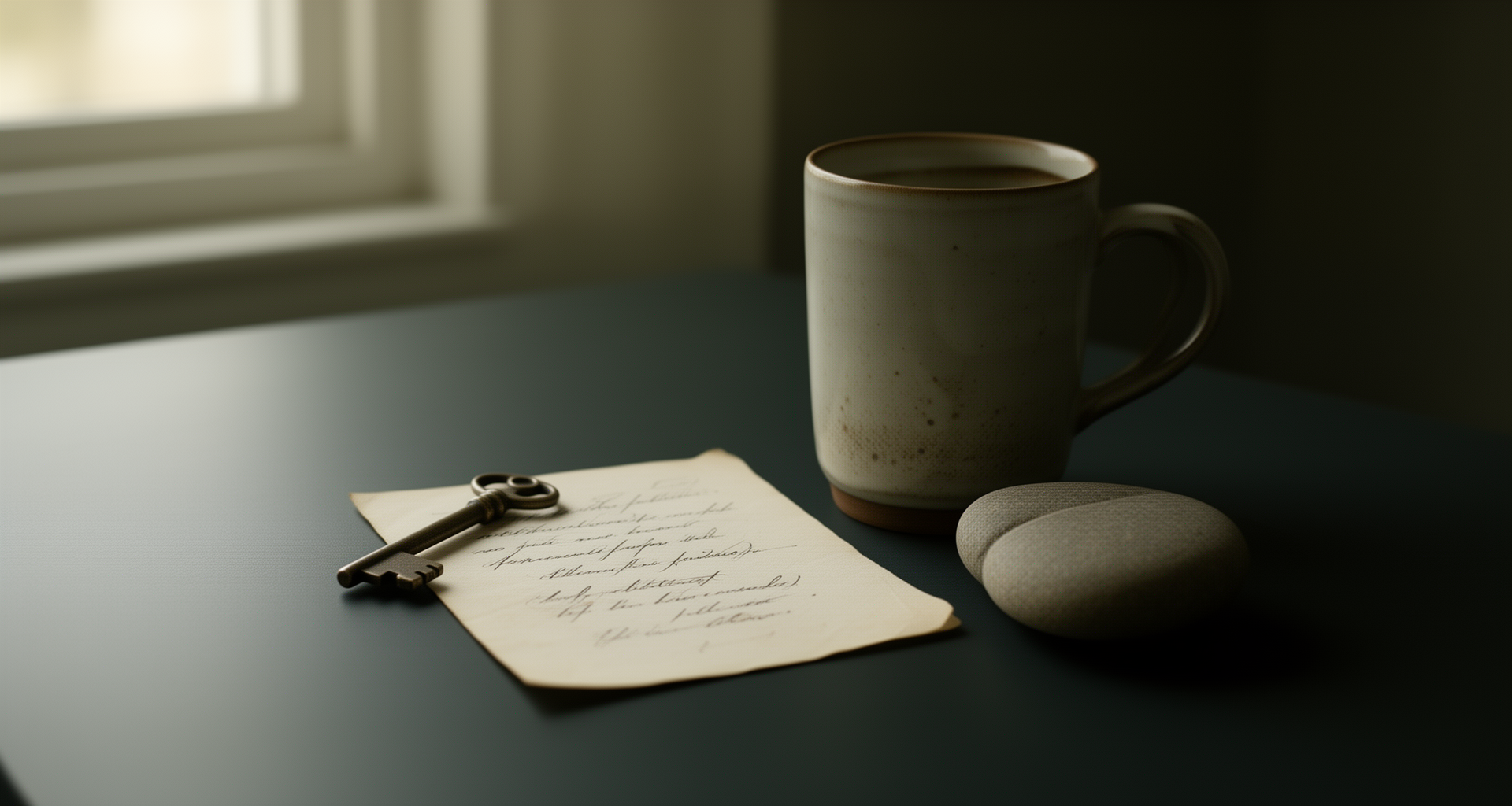
Not the valuable one. Not the one anyone else would fight to keep. It might be a chipped mug, an old ticket, a shirt you no longer wear, a key that opens nothing, a note from someone you do not speak to anymore, a stone picked up during a week you barely understood while it was happening.
You know, practically, that it is just an object. If someone asked you why it matters, you could probably give a reasonable answer. It reminds me of that time. It belonged to my father. I bought it when I first moved here. She gave it to me. I kept it from the trip.
But the reasonable answer is not the full answer. The object does not only remind you of something. It seems to hold something. A room you cannot return to. A version of yourself you have outgrown but not entirely buried. A relationship that ended without becoming meaningless. A season of life that still has a temperature.
This is why some objects feel less like possessions than witnesses.
We like to imagine memory as something stored inside the mind, but ordinary life constantly proves otherwise. Memory attaches itself to places, smells, songs, routines, clothing, light, texture, and weight. The mind does not remember alone. It recruits the world.
An object becomes symbolic when it can hold a feeling without asking you to explain it.
This is part of why certain things become hard to throw away even when they are no longer useful. The difficulty is not always sentimentality. Sometimes the object has become a small archive of continuity. It says: this happened. This version of you existed. This love, this mistake, this hope, this grief, this beginning was not imaginary.
That is why clearing a drawer can feel more serious than it should. You open a box looking for batteries and find a postcard. Suddenly you are not organizing. You are being returned. The object has not changed, but the meaning around it wakes up.
Psychologically, charged objects often work through association. The mind links an item to an emotional period, and the object becomes a shortcut back into that state. A sweater may carry the safety of a certain winter. A ring may hold both devotion and the moment devotion failed. A train ticket may hold the person you were before you knew what that journey would cost.
A packed suitcase can feel different from an empty suitcase because it is not just fabric and zippers. It is departure. A house key can become powerful because it marks belonging. A hospital bracelet, a receipt, a photograph, a child's drawing, a dried flower, a notebook from a difficult year – each can become a hinge between before and after.
This is one reason people often keep objects from painful periods. From the outside, it can look like an inability to move on. From the inside, it may be a form of honest accounting. The object says: I do not want to live there anymore, but I will not pretend it did not shape me.
There is a difference between being trapped by an object and being accompanied by it.
An object traps us when it demands that the past remain present in the same painful form. We cannot touch it without collapsing back into the old wound. We keep it not because it nourishes memory, but because letting it go would force us to admit that a chapter is over.
An object accompanies us when it has softened into meaning. It no longer insists on the old life. It simply keeps a human record. It allows us to carry something forward without being ruled by it.
This distinction matters because the question is not always, "Should I throw this away?" Sometimes the better question is, "What is this object doing in my life now?"
Is it preserving love? Is it preserving pain? Is it protecting a younger self? Is it keeping a promise? Is it proving that something happened? Is it delaying grief? Is it asking to be honored, displayed, repaired, passed on, photographed, buried, given away, or finally released?
A box of letters may be unbearable one year and tender the next. A piece of jewelry may feel cursed until the story around it changes. A childhood object may seem embarrassing in one decade and sacred in another. Meaning does not sit still inside things. It moves as we move.
This is why objects sometimes begin to feel like omens.
You find the old key on the exact day you are thinking of moving. A broken watch appears while you are afraid time is running out. A photograph slips from a book just when a memory has been pressing against you. The rational mind says coincidence. Often, it is. But coincidence is not the opposite of meaning. It is one of the ways meaning asks for attention.
The object may not be predicting the future. It may be revealing the present more sharply.
When something reappears at a charged moment, it can show you what is already alive underneath the surface. The object becomes a mirror with history inside it. It asks: why does this matter now? What part of the past is still active? What decision, grief, loyalty, fear, or desire has been waiting for a material form?
This is the quiet intelligence of symbolic life. It does not require us to believe that every object has a secret message. It asks us to notice when the ordinary stops feeling ordinary.
Ritual traditions have long understood this. People keep relics, heirlooms, prayer beads, talismans, house objects, garments, tools, and inherited items not because matter is merely matter, but because matter becomes intimate through use, touch, repetition, and story. A thing handled with feeling becomes different from a thing purchased and forgotten.
You may not need fewer meaningful objects. You may need fewer meaningless ones around them.
There is a reason a single bowl from a grandmother's kitchen can feel more alive than a room full of new decor. It has been inside a life. It has absorbed repetition. It has been reached for by hands that are no longer here. Its value is not aesthetic alone. It is relational.
Letting go can also be symbolic.
To discard, donate, burn, bury, repair, frame, or give away an object can mark a transition more honestly than pretending we are unaffected by it. The ritual does not have to be elaborate. Sometimes it is enough to hold the thing, name what it carried, and decide whether that burden still belongs with you.
The mistake is treating the decision as purely practical when it is clearly not.
If an object feels charged, pause before reducing it to clutter. Ask what kind of charge it carries. Warmth. Grief. Obligation. Shame. Protection. Hope. Evidence. A former self. A future you once imagined. A person you loved. A person you survived.
Then ask whether the object still gives that meaning a good home.
Some things should stay because they make the invisible parts of life visible. Some should leave because they keep pain too available. Some should be transformed, moved from a box of unfinished feeling into a place of chosen remembrance.
The object itself is rarely the whole story. It is the handle. What you are really holding is a relationship with time.
This is why the old mug, the key, the ticket, the note, the ring, the photograph, or the stone can feel strangely alive. Not because it has a life of its own, exactly, but because it has touched yours at a point where meaning gathered.
The ordinary thing becomes an omen when it returns you to a truth you have not finished meeting.
And maybe that is the real reason we keep certain objects. Not to live in the past. Not to prove we cannot move on. But because a life is too large to carry only in thought. Sometimes we need a small, silent thing to say: this mattered, and so did you.