What this article is really about
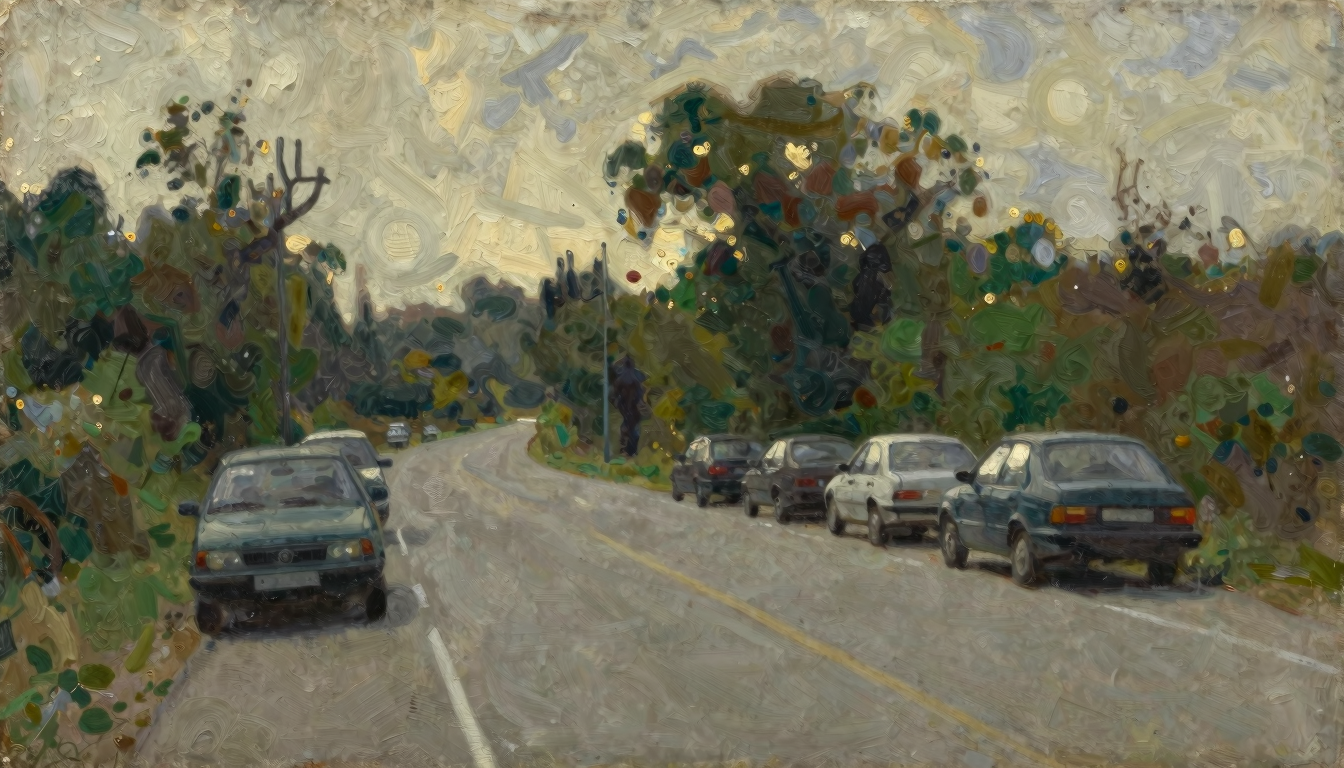
Dreaming about a traffic jam may symbolize wanting to move forward while progress depends on other people, limited space, or a shared sequence you cannot accelerate alone. Being stuck can emphasize frustration, competing demands, or uncertainty about when your turn will come. A calm wait may suggest accepting a temporary limit; frantic lane changes may suggest spending energy without gaining useful movement. The dream does not predict an accident or a failed journey. Its meaning depends on your destination, position, and what you chose to do while the road was crowded.
Direct answer
Dreaming about a traffic jam may symbolize wanting to move forward while progress depends on other people, limited space, or a shared sequence you cannot accelerate alone. Being stuck can emphasize frustration, competing demands, or uncertainty about when your turn will come. A calm wait may suggest accepting a temporary limit; frantic lane changes may suggest spending energy without gaining useful movement. The dream does not predict an accident or a failed journey. Its meaning depends on your destination, position, and what you chose to do while the road was crowded.
Shared-route congestion collective movement and junction sequencing distinguish traffic jam from generic delay.
Recall role destination bottleneck available movement communication and one coordinated next step.
A traffic jam is a particular kind of delay: many people may have somewhere to go, yet their movements depend on one another. The image may ask which part of your progress is yours to direct and which part requires coordination, room, or time.
What a traffic jam can symbolize
A crowded road may represent a shared path whose capacity is limited. The obstacle is not necessarily a lack of desire or effort. Everyone may be trying to move, while the space available cannot accommodate all those movements at once.
The favorable possibility is recognizing the actual constraint and finding a workable pace or sequence. The difficult possibility is treating every delay as a personal defeat, or assuming that more urgency will create room where none is available.
Notice whether there was a visible reason for the jam. A blocked junction differs from a long queue approaching an open destination. The first may suggest an unresolved point of coordination; the second may suggest a process that is slow but still functioning.
Traffic can also evoke the ordinary experience of commuting or a scene encountered recently. A dream need not carry a hidden lesson. If a symbolic connection fits, the shared nature of the blockage is often more informative than a universal claim that all stopped cars mean bad luck.
Driving in the jam
Driving may symbolize retaining some direction while your freedom of movement is reduced. You may know where you want to go but have to respond to conditions that do not follow your preferred timing.
If you held your place calmly, the image may suggest patience with a process whose next step is temporarily unavailable. That does not mean you should tolerate every waking delay indefinitely. A calm wait can still have a purpose and a point at which you reassess.
If you repeatedly changed lanes, consider whether each move helped or merely created the feeling of doing something. The symbolic question may concern activity without useful progress. A change is not automatically an improvement just because remaining still feels uncomfortable.
If you could not see over the cars ahead, the scene may emphasize limited information. You might be reacting to the nearest obstacle without knowing the wider situation. The dream does not reveal what others are hiding; it may highlight the value of clarifying one missing fact before making another move.
If you were driving someone else, the delay may include a sense of responsibility for their arrival. Notice whether you explained the situation or tried to promise a time you could not control. Carrying a passenger does not make you responsible for every vehicle on the road.
Being a passenger
Being a passenger may symbolize depending on someone else's decisions about direction and timing. The central issue may be whether you understand the plan, can ask a question, or feel included in choices that affect you.
A trusted driver may suggest that shared responsibility remains workable despite the delay. A driver who ignores your destination may suggest uncertainty about whose purpose the journey serves. Neither image proves anything about the real person's intentions.
If you kept giving instructions, consider whether those instructions were useful or whether they expressed the difficulty of having limited control. The scene may suggest a need for one clear conversation about the plan rather than continuous commentary on every small movement.
If the driver asked you to navigate, the image may suggest a contribution you can make without taking over the entire journey. A shared task can become clearer when responsibility is specific. The symbolic possibility is participation within limits, rather than choosing between total control and no influence at all.
The destination and the pressure to arrive
A destination can explain what the delay means in the scene. Trying to reach work may evoke responsibilities; going to a gathering may evoke belonging; heading home may evoke rest or privacy. These associations depend on what the place means to you.
If there was an appointment, the dream may emphasize the gap between an agreed time and conditions outside your control. Notice whether you could communicate that gap. A delay becomes a different symbolic situation when others know what is happening.
If you felt late but had no destination, the image may suggest urgency whose purpose is unclear. You may be comparing your movement with others without knowing what arrival would mean. The dream can invite you to name the actual goal before judging your pace.
If you forgot where you were going, the scene may emphasize motion becoming the whole concern. Being ahead of another car does not necessarily bring you closer to a destination that no longer feels relevant.
If you turned back, consider whether that felt like a considered change or an impulsive escape. Turning around can symbolize revising a plan, but it does not automatically mean failure or liberation. The consequence of the choice helps distinguish those possibilities.
A blocked junction or narrow road
A jam at a junction may symbolize several directions competing for the same space. Each movement may be reasonable on its own while their simultaneous demands prevent any of them from continuing.
Notice whether people could take turns or whether everyone tried to enter at once. The favorable tendency may be a workable sequence. The difficult tendency may be each participant treating their own urgency as an exception that others must accommodate.
A narrow road may suggest limited capacity rather than a permanent barrier. There may be room for one task, conversation, or commitment at a time. The symbolic issue can be how the available space is used, rather than whether you are capable of reaching the goal.
If a broken-down vehicle caused the blockage, the scene may emphasize a specific dependency needing attention. It does not predict a real breakdown. Identifying one point that needs help is different from declaring the entire journey impossible.
If you never discovered the cause, allow that uncertainty to remain. A dream does not provide evidence that someone deliberately obstructed you. The image may concern living with incomplete information while deciding what is still possible.
Finding another route
A side road may symbolize a different way to approach the same purpose. A useful alternative has its own conditions: distance, time, accessibility, and the people traveling with you. Its presence does not guarantee that it will be easier.
If the alternative was clear and suitable, the scene may suggest flexibility. If it led to another jam, it may emphasize that changing routes does not remove every shared constraint. The meaning depends on what you gained and what you gave up.
If you left the car and walked, the image may symbolize changing the scale or method of a task. Walking can suggest a more direct or modest approach, but it can also leave something important behind. Notice whether that choice actually served the destination.
If someone offered directions, consider whether you could understand and evaluate them. The dream may emphasize being open to help while retaining judgment. Advice from a dream figure is not a verified route for a real journey.
A shortcut through a place you could not use may symbolize the appeal of an option whose terms do not fit your circumstances. The image can be useful without recommending that you take risks or disregard actual road conditions.
When the traffic begins to move
Traffic starting again may symbolize renewed coordination or a constraint becoming less restrictive. Notice whether the movement was gradual or sudden and whether you were ready to continue.
A slow return to motion can suggest that progress does not have to be dramatic to be real. A small available step may be enough for the current stage. The dream does not promise that a waking problem will soon resolve.
If the road opened but you stayed still, the scene may emphasize hesitation after a long delay. You may need to recognize that the conditions have changed. This is a conditional reading of the scene, not a judgment that you are wasting an opportunity.
If everyone accelerated at once, the image may suggest urgency returning before there is adequate room. The favorable movement may be a pace that allows the shared route to remain usable rather than a race to recover every lost moment.
If you arrived after the event had ended, consider what remained available. The symbolic question may concern responding to an altered situation rather than demanding that the original plan be restored exactly.
Spiritual meaning and favorable tendencies
In a conditional spiritual reading, a traffic jam may symbolize patience, proportion, and participation in a path shared with others. It can bring the limits of individual urgency into view without implying that your destination is wrong.
A favorable tendency may be discovering a workable sequence, accepting help, or choosing an alternative that fits your purpose. A difficult tendency may be mistaking delay for punishment, treating other people as obstacles without understanding the shared constraint, or repeatedly forcing movement that has no room to happen.
The dream does not establish blocked energy, a curse, guaranteed good fortune, or divine opposition to a plan. Those claims cannot be inferred from stopped vehicles. The scene may be personally meaningful while its interpretation remains conditional.
If the jam felt peaceful, it may suggest that a pause has room for attention. If it felt frightening, it may emphasize uncertainty or the wish to escape. The feeling helps refine your association; it does not predict the outcome of a real journey.
Four ordinary-life connections
Work and shared dependencies
A project may depend on several people using one resource or completing tasks in a particular order. A traffic jam can symbolize the frustration of being ready while the next step depends on a shared point of capacity.
Check the specific dependency and who can clarify its timing. Agree on one sequence or prepare a task that does not depend on the blocked step. The favorable movement is coordination; the difficult movement is adding more urgent requests to the same crowded point.
Relationships and competing conversations
Several people may want attention at the same moment, making it difficult for anyone to finish a conversation. A jam can symbolize competing needs whose simultaneous expression prevents useful response.
Check what each person actually needs and what can be discussed separately. Arrange one conversation with an understood purpose and time. Making room for one exchange can serve connection better than trying to answer every concern at once.
Family plans and responsibility
A shared outing may involve different schedules, destinations, and expectations. Driving in congestion can symbolize carrying a plan whose timing no longer belongs to one person alone.
Check which arrangements are fixed and where adjustment is possible. Tell the others about one constraint and agree on a workable revision. Responsibility may mean communicating clearly rather than guaranteeing arrival despite every external condition.
Personal projects and comparison
You may judge a project by how quickly others seem to advance. A line of cars can symbolize comparison that makes your own destination less visible.
Check the actual goal and the next step available within your circumstances. Choose one modest action that serves that goal. The favorable movement is purposeful progress; the difficult movement is spending the day changing direction simply to appear ahead.
A modern example
Marcus helped organize a neighborhood repair afternoon. Three activity groups needed the same room for preparation, and each wanted access first. Marcus kept sending messages asking everyone to move faster, while the room remained occupied and the requests became harder to sort.
In a dream, he drove toward a meeting through a traffic jam at a small junction. Every driver tried to enter the crossing together. Marcus changed lanes several times but returned to almost the same position. He remembered that the vehicles had room to pass individually, yet no one had agreed whose turn came next.
Marcus did not take the dream as a prediction about the event. He recognized a question about the shared room. He asked the group leaders which preparations needed that space, agreed on short separate periods, and moved one simple task to an available table elsewhere.
One group still began later than planned, and a few materials needed rearranging. The afternoon went ahead with a smaller opening activity. Marcus spent less time repeating urgent messages and more time helping the volunteers use their allotted space.
The traffic image helped him distinguish a lack of capacity at one moment from a lack of commitment. More urgency had not opened the junction; a workable sequence let the participants move through it.
Reading your own traffic-jam dream
Recall whether you drove, rode as a passenger, searched for another route, or waited. Identify the destination and the shared point of congestion. Notice whether the obstacle had a cause, whether you could communicate, and what your choices changed.
If a waking connection fits, clarify one dependency, agree on a sequence, or reconsider an option whose conditions you understand. If no connection fits, the road can remain an ordinary dream scene. A delay in sleep does not determine your future pace or require you to abandon a real plan.
Frequently asked questions
What does dreaming about a traffic jam mean?
It may symbolize progress limited by shared capacity or coordination. Notice your destination and the action available rather than assuming delay predicts failure.
What does driving in a traffic jam symbolize?
It may suggest keeping direction while movement depends on others. Repeated lane changes can emphasize activity that does not improve your position.
What does being a passenger mean?
It may emphasize depending on another person’s plan. Notice whether you understand the destination can ask questions or can make a specific contribution.
What does a jam at a junction mean?
It may symbolize several reasonable demands competing for the same space. A workable sequence can matter more than increased urgency.
What does finding an alternative route mean?
It may suggest flexibility when the alternative fits your purpose and circumstances. Another route does not guarantee fewer limits.
What does traffic beginning to move mean?
It may symbolize renewed coordination or an available next step. It does not promise a waking problem will resolve soon.
Does a traffic jam dream have a spiritual meaning?
A conditional reading may concern patience proportion and a shared path. It does not establish punishment a curse or blocked spiritual energy.
Does the dream predict an accident or failed journey?
No. The scene may reflect delay comparison or uncertainty but cannot establish a future accident or determine a real journey’s outcome.