What this article is really about
Dreaming about a baptism may symbolize a beginning that you want to recognize, a changed identity, or entry into a shared commitment. Water can suggest renewal, while the presence of others may emphasize being received or witnessed. Being baptized differs from watching another person, and a baby's baptism may emphasize care for something at its beginning. The dream does not establish salvation, erase past events, predict a religious calling, or require a ceremony. Its meaning depends on whether the transition felt chosen and what you understood would follow it.
Direct answer
Dreaming about a baptism may symbolize a beginning that you want to recognize, a changed identity, or entry into a shared commitment. Water can suggest renewal, while the presence of others may emphasize being received or witnessed. Being baptized differs from watching another person, and a baby's baptism may emphasize care for something at its beginning. The dream does not establish salvation, erase past events, predict a religious calling, or require a ceremony. Its meaning depends on whether the transition felt chosen and what you understood would follow it.
Witnessed transition reception and continuity after a marked beginning.
Recall participant choice water aftermath intention and one suitable following action.
A marked beginning can matter without completing the whole change. The symbolic question may concern how the new intention becomes part of ordinary life after the moment of recognition.
What baptism can symbolize in a dream
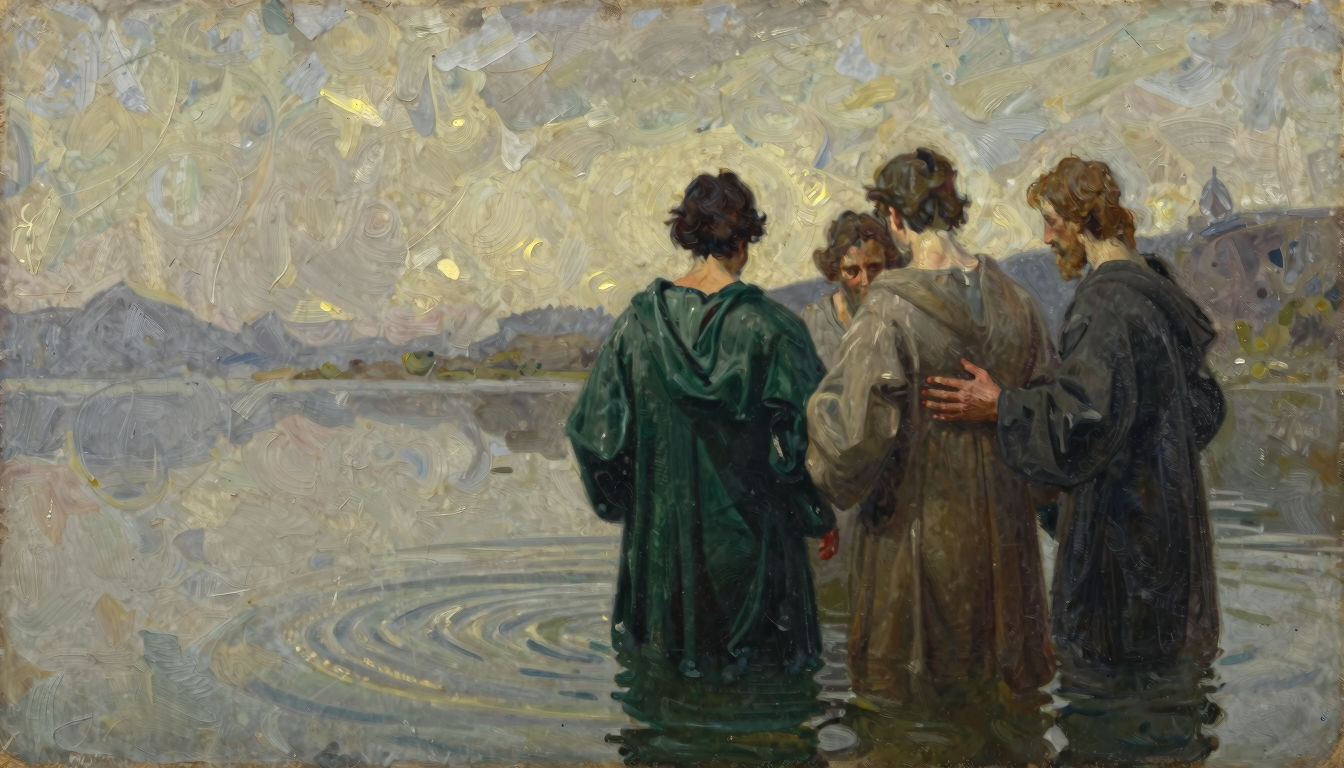
A baptism scene may represent a transition given a visible form. In a conditional symbolic reading, it can suggest renewal, reception, commitment, or a wish to begin differently. The ceremony can make a change feel recognized rather than merely imagined.
The favorable possibility is a beginning whose purpose and next steps are understood. The difficult possibility is expecting the marked moment to do all the work, or feeling that another person has defined the transition before you have chosen it.
Notice whether you knew why the ceremony was taking place. A clear intention differs from following a sequence whose meaning remains uncertain. The dream does not determine the validity of an actual religious practice or reveal what a community believes.
The image may relate to faith, but it may also give an ordinary change a ceremonial shape. A new role, a revised habit, or joining a group can feel like a threshold whose meaning you want to acknowledge.
Recognition and continued practice
Being recognized can make an intention more concrete. If others welcomed you, the scene may emphasize that change can be supported by a shared arrangement rather than carried entirely alone.
Yet reception is not the same as knowing every expectation that follows. The dream may ask how a new identity is lived, not whether the ceremony makes you instantly capable of everything associated with it.
Renewal without erasing history
Water may suggest a wish to approach something with a different intention. That does not mean the past disappears or that a beginning must deny what preceded it.
If you felt relieved, consider what you hoped to release. If you felt pressured, consider whether the scene demanded that you become entirely different at once. A workable beginning can include continuity as well as change.
Being baptized yourself
Being baptized may symbolize personally entering a transition. Notice whether you approached willingly, understood the act, or felt carried through it without a choice. The relationship between intention and participation helps refine the meaning.
A calm experience may suggest readiness for a defined beginning. An uneasy experience may suggest uncertainty about the terms or expectations. Neither feeling proves spiritual acceptance or rejection.
If you emerged and joined ordinary activity, the dream may emphasize continuity after recognition. If the scene ended immediately, it may leave the next stage unclear. You do not have to invent an outcome the dream did not show.
If you expected to feel completely changed and did not, the image may concern a standard you have attached to beginning. A first step can be meaningful without producing an extraordinary feeling or eliminating every old difficulty.
The dream does not authorize you to make a religious decision on its own. If the image connects to actual faith questions, consider your beliefs, circumstances, and knowledgeable guidance independently of its emotional intensity.
Watching someone else's baptism
Watching a baptism may symbolize witnessing another person's transition or considering your relationship with a shared beginning. You may be a supporter, an observer, or someone wondering whether there is a place for you too.
If you felt happy for the person, the scene may suggest that another person's change does not require you to make the same change. If you felt left behind, it may suggest comparison with an imagined timetable.
Notice whether you knew the person. A familiar figure may connect the scene to a particular relationship, while an unknown person can make the question more general. Their dream participation does not establish their real intentions or spiritual state.
If you were asked to help, consider whether the task was clear. Support can be meaningful without making you responsible for the whole transition. The dream may distinguish being present from managing every condition of another person's beginning.
A baby baptism in a dream
A baby baptism may emphasize reception, care, or a beginning whose future is not yet developed. If you held or accompanied the baby, the image may suggest responsibility for a fragile new activity or relationship.
It does not predict pregnancy, establish an event concerning a real child, or determine a child's religious future. The baby's role is part of the dream scene, and its meaning depends on the action around it.
Notice whether the adults shared care or expected one person to handle everything. A shared welcome differs from an obligation placed on a single caretaker. The symbolic question may concern what a new beginning needs from those around it.
If you worried about doing the ceremony perfectly, the scene may emphasize a wish to guarantee the future through one flawless event. A beginning can deserve care without giving you control over every later result.
If the baby was calm or upset, consider how that affected your action. The feeling does not provide a prediction. It may make your experience of care, uncertainty, or response more visible.
Water, immersion, and emerging
Water in a baptism scene may symbolize renewal or passage. Immersion can emphasize entering the experience fully, while emerging may emphasize returning to ordinary activity with a changed intention.
If the water felt comfortable, the scene may suggest that the transition's conditions were workable. If it felt overwhelming, it may emphasize the difference between wanting renewal and feeling able to participate in the particular way presented.
Clear or cloudy water can affect your ability to see what was happening. Clarity may suggest understood terms; poor visibility may suggest uncertainty. Neither establishes moral purity, spiritual danger, or a fixed judgment about your character.
A small amount of water may give the beginning a modest form. A large body of water may make the passage feel more extensive. Size alone does not determine the importance or validity of the dream's meaning.
If you kept returning to the water, the image may suggest repeatedly seeking the feeling of a beginning. Ask whether the scene allowed the intention to move forward afterward. Renewing an intention differs from expecting every day to feel like the first moment.
Delayed, interrupted, or unfamiliar ceremonies
A delayed baptism may symbolize a beginning whose conditions are not yet clear. Waiting can suggest patience, incomplete agreement, or dependence on a step that has not been explained.
An interrupted ceremony may emphasize the difference between intention and completion. Notice whether you could resume, chose to stop, or did not know what happened next. It does not predict that an actual commitment will fail.
An unfamiliar ceremony may suggest approaching a shared practice without knowing its terms. A question or explanation can matter more than immediate confidence. The dream does not require you to imitate an unfamiliar ritual in waking life.
If someone insisted that you continue, consider whether the scene emphasized authority or pressure. If you chose to wait, it may suggest room to understand the commitment. These are questions about dream action, not accusations about a real community.
A beginning you do not choose can feel different from a beginning you welcome. That distinction remains useful even when the visible ceremony is the same.
Christian and biblical questions
Questions about baptism dream meaning in Christianity or a biblical meaning often ask whether the dream has religious authority. This article does not supply a verified biblical rule assigning a certain result to a personal baptism dream.
The scene may invite reflection on faith, renewal, reception, or commitment according to your own associations. It does not establish salvation, forgiveness, spiritual status, or a command to undergo a particular act. A dream image and an actual religious teaching are different kinds of information.
If a remembered story or ceremony comes to mind, consider what it means to you without assuming that your dream carries its same circumstances or result. Familiar imagery can be significant while leaving the personal interpretation uncertain.
For a real religious question, discuss the practice with knowledgeable guidance in your tradition. The dream's emotional force can motivate reflection without replacing understanding, consent, or the actual terms of participation.
Four ordinary-life connections
A new personal intention
You may decide to approach an ordinary habit differently and want a clear moment that marks the change. Baptism can symbolize recognition of that intention without showing that the whole process is complete.
Check what the next small action actually involves. Choose one repeatable step rather than demanding that the beginning eliminate every old difficulty. The favorable symbolic movement is toward practice that carries the intention beyond its first moment.
Joining a community
You may enter a group and feel both welcomed and uncertain about expectations. A baptism scene can symbolize reception into a shared arrangement while leaving your particular role to be learned.
Check which expectations have been stated and which you are assuming. Ask one practical question about participation. Belonging can begin with a clear modest role rather than immediate knowledge of the whole group's history.
Relationships after a conversation
A friendship or partnership may have a conversation intended to mark a new approach. The ceremony can symbolize that recognition, while the action afterward may concern whether the changed intention reaches everyday conduct.
Check what each person understood the agreement to mean. Identify one concrete behavior both can describe. A meaningful conversation does not need to erase the past, but its promise becomes clearer through what follows it.
Work and a changed role
You may be formally welcomed into a responsibility and expect to feel fully ready immediately. Baptism may symbolize recognition of the transition while the unfamiliar sequence reflects the work of learning.
Check what the role requires first and where guidance is available. Confirm one early task or point of support. A new title or ceremony can acknowledge a beginning without making uncertainty a failure of suitability.
A modern example
Olivia joined a neighborhood seed-sharing group and volunteered to help manage its monthly exchanges. At the welcome meeting, she felt pleased to be included, then assumed that being accepted meant she should already know how every part worked. She avoided asking questions and began preparing more materials than the group needed.
In a dream, Olivia stood at the edge of water during a baptism. After the welcome, she remained there waiting to feel completely different before stepping onto the path with the others. The detail she remembered was that the next ordinary step was available while she expected the beginning to make her instantly certain.
Olivia did not treat the dream as a religious instruction. She recognized a question about how she was interpreting reception into the group. She asked an experienced member which preparation was useful for the next exchange and agreed to manage one table while learning the remaining tasks gradually.
At the exchange, she misplaced a container and corrected it with help. She answered the questions she knew and directed another question to the experienced member. The group welcomed her contribution without expecting complete knowledge. She returned the next month with a clearer understanding of the table's work.
The baptism image helped Olivia distinguish a recognized beginning from a completed transformation. Acceptance gave her a place to learn; it did not require certainty before she could participate.
Spiritual meaning and favorable tendencies
The spiritual meaning of baptism in a dream may concern renewal, a chosen beginning, or being received into something meaningful. These are conditional reflections rather than a verified universal interpretation.
A favorable tendency may emphasize an intention supported by understood terms and continued action. A difficult tendency may emphasize pressure, an expectation of instant perfection, or repeatedly seeking a new beginning without allowing ordinary practice to follow.
The dream does not guarantee blessing or establish a judgment about spiritual worth. Its useful question may be what the transition means to you and how that meaning can have a proportionate expression afterward.
Reading your own baptism dream
Recall who participated, whether the transition was chosen, and what happened after the water. Distinguish being welcomed from knowing every expectation, and renewal from erasing history. Notice whether the scene allowed a next step or kept asking for a complete change in feeling first.
If a waking connection fits, identify the intention and one suitable action that follows it. A clarified agreement, modest task, or informed conversation can make the beginning more concrete. If none fits, the ceremony can remain a vivid dream scene without becoming an instruction or prediction.
Frequently asked questions
What does dreaming about a baptism mean?
It may symbolize a recognized beginning changed identity or reception into a shared commitment. Notice whether it was chosen and what followed.
What does being baptized yourself symbolize?
It may emphasize personally entering a transition. A welcomed beginning differs from being carried through an unclear sequence without choice.
What does watching someone else’s baptism mean?
It may emphasize witnessing or supporting a transition. Being present does not make you responsible for every condition of another person’s beginning.
What does a baby baptism mean in a dream?
It may emphasize care and reception at a beginning. It does not predict pregnancy or determine a real child’s religious future.
What do immersion and emerging mean?
They may emphasize passage and returning to ordinary life with a changed intention. Water clarity does not establish moral purity or spiritual status.
What do delayed or interrupted baptisms mean?
They may suggest unclear conditions incomplete agreement or room to understand a commitment. They do not predict real failure.
What is the Christian or biblical meaning of a baptism dream?
This article supplies no verified biblical rule assigning a certain result to the personal dream. It does not establish salvation forgiveness or a religious command.
What is the spiritual meaning of baptism in a dream?
It may invite conditional reflection on renewal reception and a chosen beginning. Recognition and continued ordinary practice remain distinct.